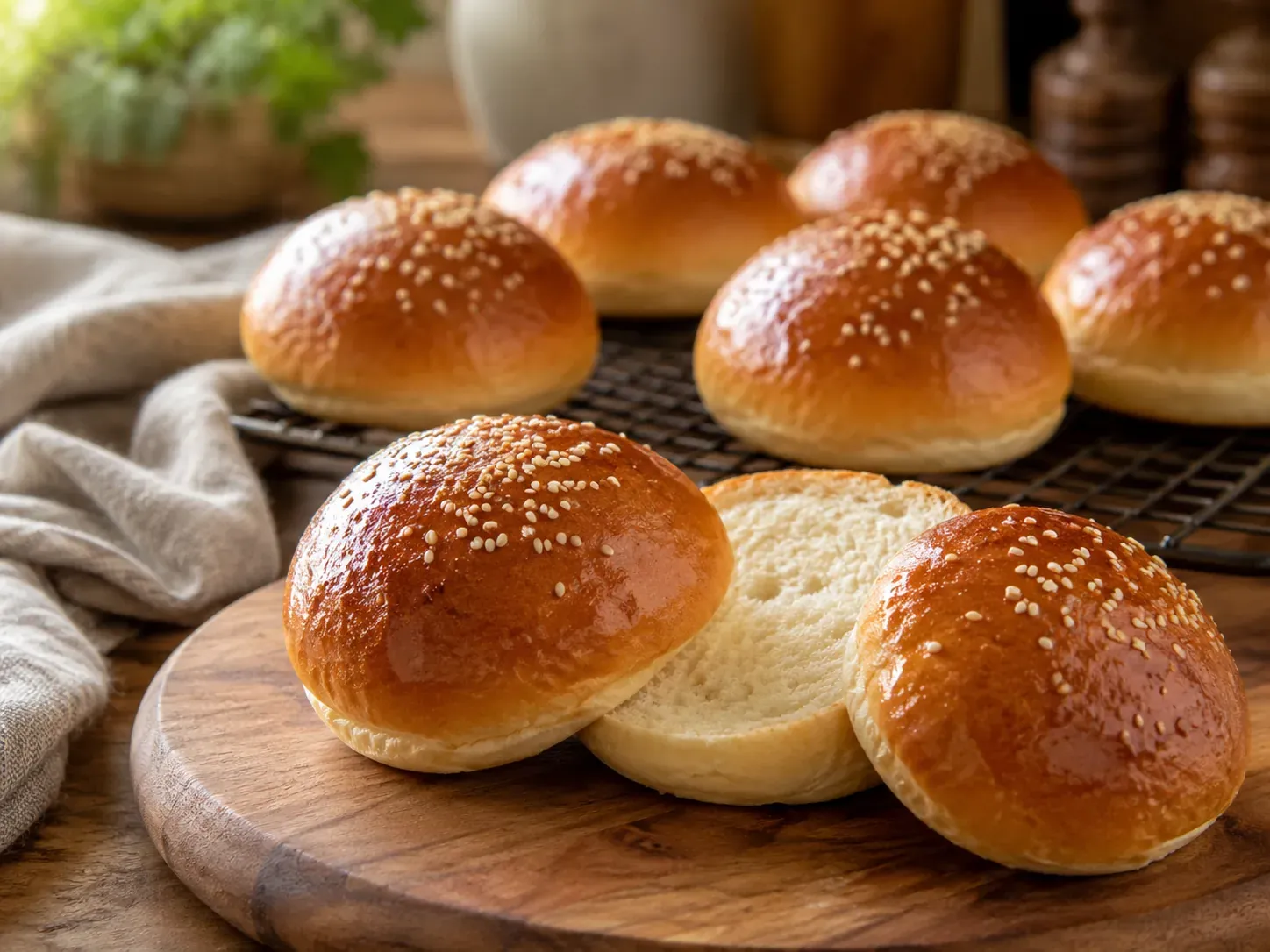
Buttery Brioche Buns
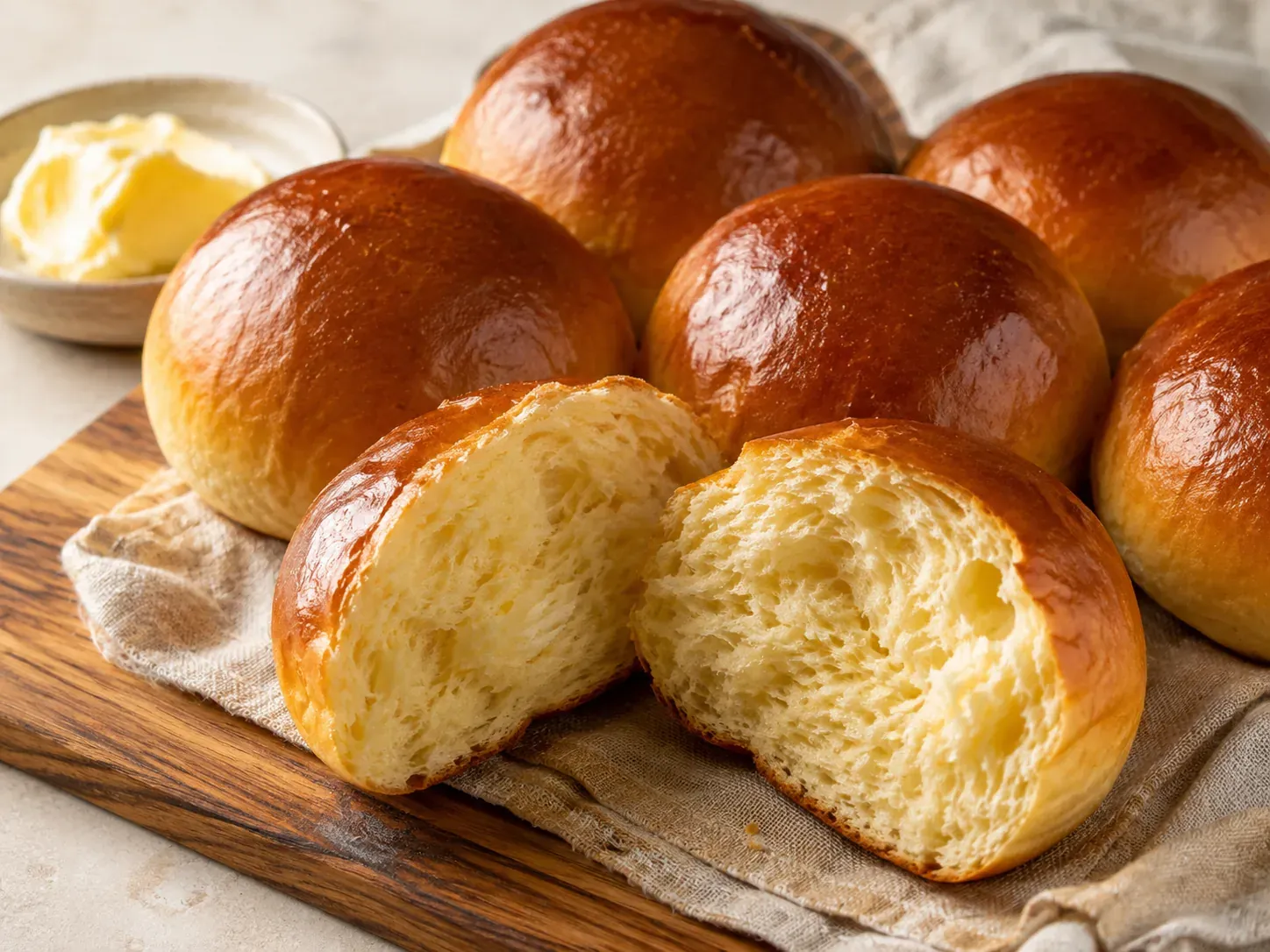
Rich, soft burger buns made with eggs and butter for a tender bakery-style crumb.
- Measurements grams + cups
Why You'll Like This Recipe
- Rich enough to eat on their own, sturdy enough to hold a burger without collapsing.
- The butter goes in gradually after the dough has come together, which is what makes it brioche rather than a greasy dough.
- Freeze well split, so a batch of eight lasts.
Rich, soft burger buns made with eggs and butter for a tender bakery-style crumb.
Recipe
Buttery Brioche Buns
Rich, soft burger buns made with eggs and butter for a tender bakery-style crumb.
Ingredients
Ingredients scaled. The method below still refers to the original quantities.
Instructions
- Step 1. Combine the warm milk, sugar, yeast, and 2 of the eggs. Add the flour and salt and mix until a rough dough forms.
- Step 2. Knead 5 minutes, then add the softened butter a spoonful at a time, kneading until each addition is absorbed.
- Step 3. Continue kneading 8 to 10 minutes until glossy, soft, and elastic.
- Step 4. Cover and rise 75 to 90 minutes, until nearly doubled.
- Step 5. Divide into 8 pieces and shape into tight balls. Flatten slightly and place on a lined baking sheet.
- Step 6. Cover and rise 35 to 50 minutes, until puffy.
- Step 7. Beat the remaining egg with the water. Brush the buns and add sesame seeds if desired.
- Step 8. Bake at 190 C / 375 F for 16 to 20 minutes, until deep golden.
Notes
- The dough will feel sticky before the butter is fully incorporated. Keep kneading instead of adding lots of flour.
- Butter added all at once will refuse to combine. A spoonful at a time is slower but it is the difference between brioche and a greasy dough.
- Expect the dough to look wrong for several minutes after the first butter goes in — greasy, slack and refusing to come together. Keep kneading. It comes back glossy and elastic.
- Flatten the shaped balls more than looks right. They rise tall in the oven, and a bun that starts round finishes domed rather than burger-shaped.
Buttery Brioche Buns — Simple Table Recipes · https://simpletablerecipes.com/recipes/buttery-brioche-buns/
Ingredient Notes
- Unsalted butter, very soft
- Very soft, not melted and not merely out of the fridge. It has to be soft enough to smear into the dough a spoonful at a time and be absorbed before the next addition goes in.
Equipment
- Stand mixer or strong arms
- Baking sheet
- Pastry brush
Substitutions
- Sesame seeds
- Optional. Add them straight after the egg wash so they stick. Poppy seeds or nothing at all work equally well.
- Milk
- Whole milk gives the softest crumb. Semi-skimmed works; plant milks make a slightly less tender bun.
Storage & Freezing
Storing: Keep in a sealed bag at room temperature for 2 to 3 days. They stale faster than a plain roll because of the egg.
Freezing: Split them before freezing and toast the cut sides straight from frozen — that is how they are best used anyway.
Frequently Asked Questions
Why is my brioche dough greasy and not coming together?
This is normal partway through adding the butter. Enriched dough passes through a stage where it looks broken and refuses to hold. The fix is to keep kneading rather than to add flour — it comes back together glossy once the butter is fully worked in.
Why add the butter gradually?
Butter coats flour proteins and stops gluten forming. Adding it all at once means the dough never develops structure and bakes dense and heavy. Adding it a spoonful at a time, after the dough has already come together, lets the structure survive.
Can I make brioche buns by hand?
Yes, though it is genuinely hard work — expect 15 minutes or more of kneading once the butter goes in. A stand mixer with a dough hook makes this recipe considerably easier than most.
What is the difference between brioche buns and regular burger buns?
Brioche uses substantially more butter and egg, which gives a richer, softer, slightly sweet crumb and a deep golden colour. A standard burger bun is leaner and lighter. Brioche holds up better to a juicy filling.
Why did my brioche buns not rise?
Enriched dough rises more slowly than lean dough — the fat and sugar both slow the yeast down. Allow up to 90 minutes for the first rise and judge by size rather than the clock. A cold kitchen can easily double the time.
Did you make this?
Let other people know how it went. One tap, nothing to fill in.
Thanks — that helps.