Japanese Milk Bread
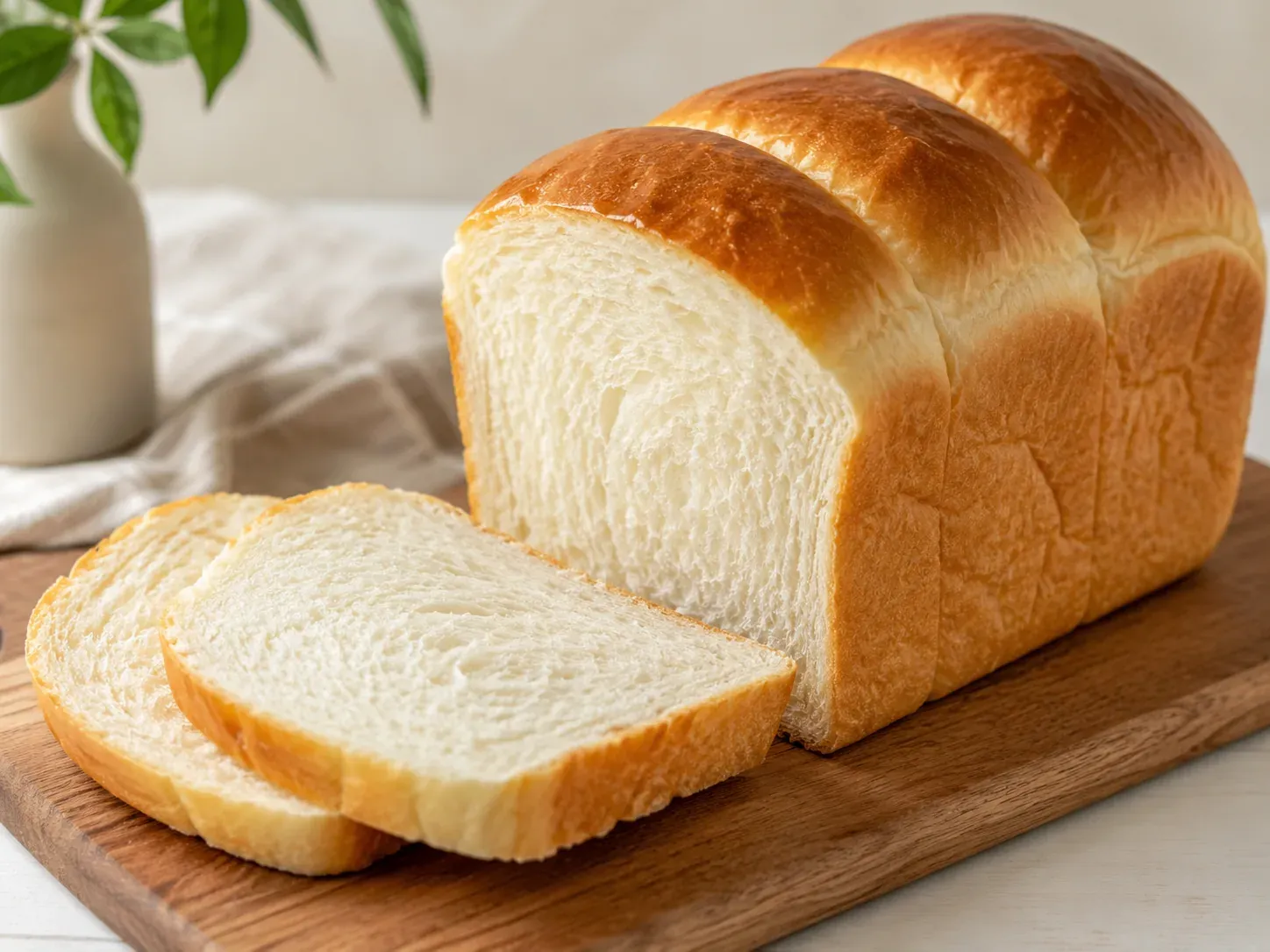
An exceptionally soft, feathery loaf made with a tangzhong starter, giving a tender crumb that stays fresh for days.
- Measurements grams + cups
- Cuisine Japanese
Why You'll Like This Recipe
- The tangzhong is the whole trick — five minutes of whisking that changes how much water the dough can hold.
- Stays genuinely soft for three or four days, where a plain white loaf is stale by day two.
- Pulls apart in feathery sheets rather than crumbling, which is what makes it worth the extra step.
Recipe
Japanese Milk Bread
A feathery soft loaf made with a tangzhong starter.
Ingredients
Ingredients scaled. The method below still refers to the original quantities.
For the tangzhong
For the dough
Instructions
- Step 1. Make the tangzhong. Whisk the 25 g flour and 125 g milk in a small saucepan. Cook over medium-low heat, stirring, until thick enough to leave lines in the pan. Cool until just warm.
- Step 2. Combine the remaining flour, sugar, yeast and salt. Add the warm milk, egg and tangzhong.
- Step 3. Knead for 6 minutes, then add the soft butter gradually. Continue kneading 8 to 10 minutes, until glossy and very elastic.
- Step 4. Cover and rise for 60 to 75 minutes, until nearly doubled.
- Step 5. Divide into 3 equal pieces. Flatten each into a rectangle, roll tightly into a short log, and place the three logs side by side in a greased 9 x 5 inch loaf pan.
- Step 6. Cover and rise 35 to 45 minutes, until the dough crowns just above the rim. Heat the oven to 175 C / 350 F.
- Step 7. Brush with milk or egg if desired. Bake for 28 to 32 minutes, until evenly golden.
- Step 8. Remove from the pan and cool for at least 45 minutes before slicing.
Notes
- When the butter first goes in the dough will look greasy and broken. Do not add flour. Keep kneading and it comes back together glossy and smooth — this takes several minutes and looks wrong the whole time.
- Roll the three logs tightly. Loose logs leave gaps that show as holes in the finished slices.
- Judge the second rise by the dough, not the clock. It should crown just above the rim before it goes in.
Japanese Milk Bread — Simple Table Recipes · https://simpletablerecipes.com/recipes/japanese-milk-bread/
Ingredient Notes
- The tangzhong
- Cooking a small portion of the flour with milk gelatinises the starch, which lets it hold far more liquid than raw flour would. That extra trapped water is what keeps the finished loaf soft for days rather than hours. It should be thick like pudding — not dry, not rubbery.
- Bread flour
- Worth using here rather than all-purpose. This is a wet, enriched dough and it needs the extra protein to build enough structure to hold its shape.
- Very soft butter
- Added after the dough has come together, in pieces, and slowly. Butter added at the start coats the flour and stops gluten forming, which gives a squat, dense loaf.
Equipment
- Small saucepan
- Stand mixer or strong arms
- 9 x 5 inch / 23 x 13 cm loaf pan
- Digital kitchen scale
Substitutions
- Milk
- Whole milk gives the softest result. Semi-skimmed works. Plant milks work in both the tangzhong and the dough, though the crumb is slightly less rich.
- Shaping
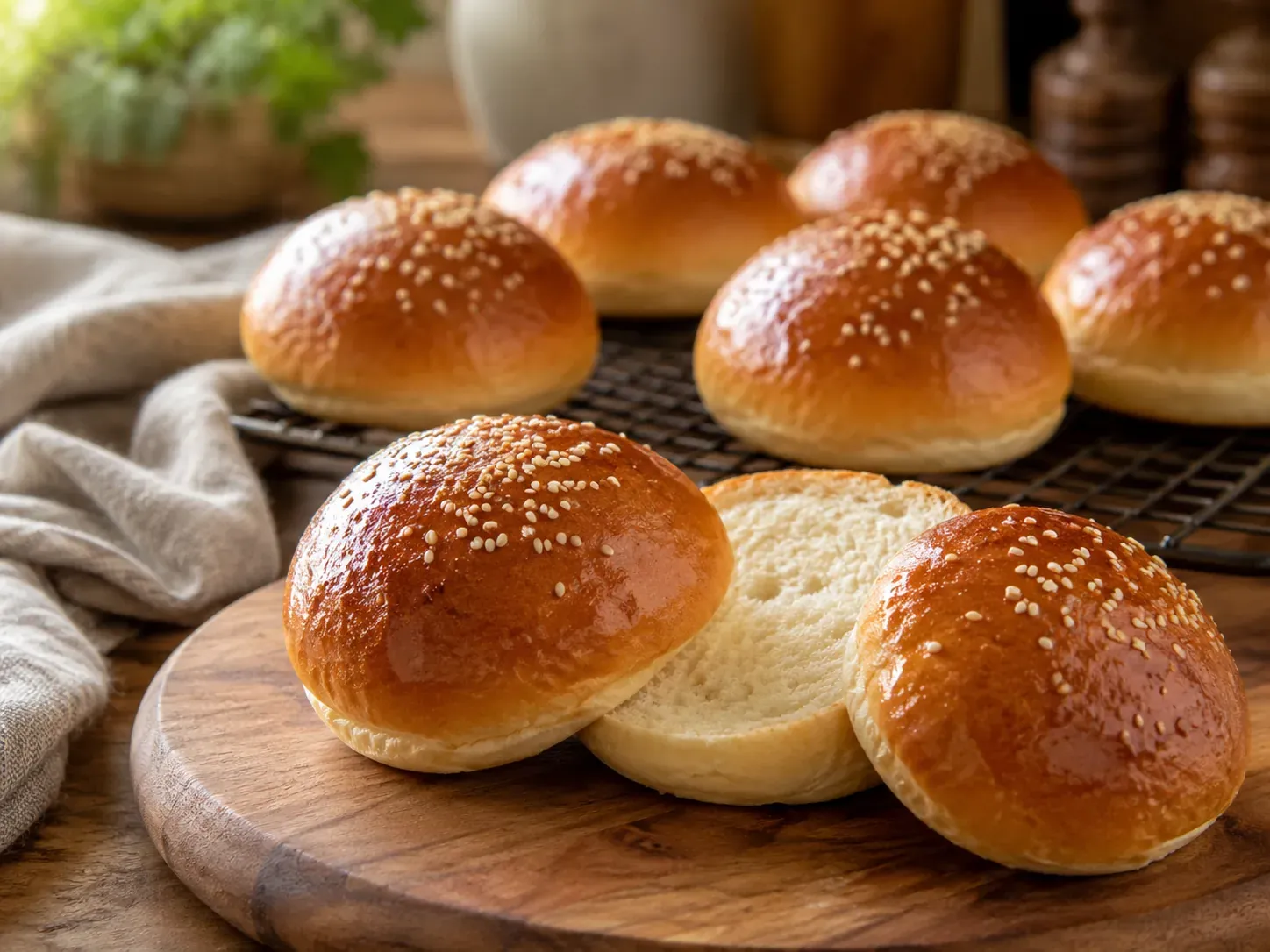
- The same dough makes excellent rolls — divide into 9 pieces, place in a square pan, and reduce the bake to about 20 minutes.
Storage & Freezing
Storing: Keep tightly wrapped at room temperature for up to 4 days. This is the loaf that genuinely stays soft, so there is no need to refrigerate it.
Freezing: Freeze whole or sliced for up to 2 months. Slices toast well straight from frozen.
Frequently Asked Questions
What is tangzhong and why does it matter?
It is a cooked paste of flour and milk, whisked into the dough. Heating the starch lets it absorb several times its weight in liquid, so the dough carries more water without becoming unmanageable. That water stays in the crumb after baking, which is why the loaf stays soft for days.
Why is my milk bread dough so sticky?
Because it should be. This is a high-hydration enriched dough and it will cling to the bowl for much of the kneading. Adding flour to make it feel comfortable is the single most common reason the loaf comes out dense.
My dough turned greasy when I added the butter — did I ruin it?
No. That stage always looks wrong. The butter needs several minutes of kneading to work into the gluten network. Keep going and it becomes glossy and smooth.
Can I make Japanese milk bread without a stand mixer?
Yes, but it is genuine work. The dough is wet and the butter stage is long. Use a dough scraper, resist adding flour, and expect around 20 minutes of hand kneading in total.
Why did my loaf have large holes in it?
The three logs were rolled too loosely, or air was trapped when they were shaped. Flatten each piece firmly before rolling and press as you go.
How is this different from ordinary white bread?
The tangzhong and the enrichment. There is more liquid, plus egg and butter, and the crumb is softer and more feathery. It also stays fresh noticeably longer.
Did you make this?
Let other people know how it went. One tap, nothing to fill in.
Thanks — that helps.