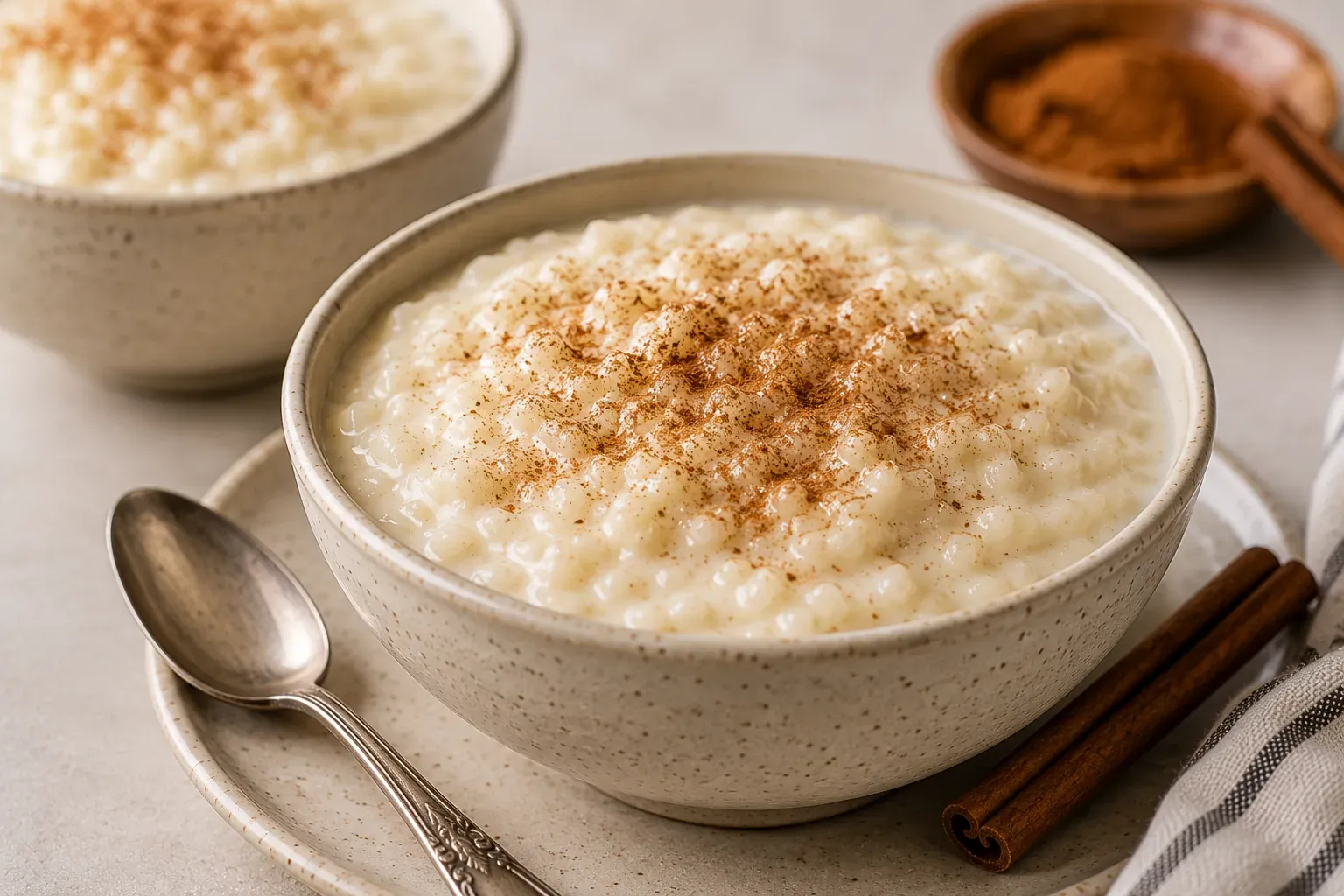
Creamy Rice Pudding
A cosy stovetop rice pudding cooked slowly with milk, vanilla and cinnamon until thick and creamy.
- Measurements grams + cups
- Cuisine American
Why You'll Like This Recipe
- Rice, milk, sugar and a little vanilla. Everything is probably already in the cupboard.
- Cooking the rice in water first and adding the milk afterwards is what gets it creamy without an hour of stirring.
- Good warm on a cold evening and good cold from the fridge the next day, which not many desserts manage.
Recipe
Creamy Rice Pudding
Cosy stovetop rice pudding with vanilla and cinnamon.
Ingredients
Ingredients scaled. The method below still refers to the original quantities.
Instructions
- Step 1. Combine the rice and water in a saucepan. Bring to a simmer, cover, and cook for 15 minutes, until the water is absorbed.
- Step 2. Add the milk, sugar and salt. Bring back to a simmer over medium-low heat, uncovered.
- Step 3. Cook for 18 to 22 minutes, stirring often, until the rice is tender and the mixture is thick and creamy.
- Step 4. Remove from the heat and stir in the vanilla, cinnamon and butter.
- Step 5. Let it stand for 10 minutes to thicken further.
- Step 6. Serve warm with extra cinnamon, or chill completely. Loosen with a splash of milk when reheating.
Notes
- Stir often once the milk goes in. Milk and starch catch on the bottom of the pan quickly, and a scorched layer will flavour the entire batch.
- Keep it at a lazy simmer, not a rolling boil. Too much heat makes the milk split before the rice is tender.
- It should look slightly looser than you want when you take it off the heat. It thickens noticeably during the 10 minute stand and again in the fridge.
- Chilled rice pudding sets firm. A splash of milk stirred through brings it back to a spoonable texture.
Creamy Rice Pudding — Simple Table Recipes · https://simpletablerecipes.com/recipes/creamy-rice-pudding/
Ingredient Notes
- Short- or medium-grain rice
- The starch is the point. Short-grain rice releases much more of it than long-grain, and that starch is what thickens the milk into a pudding rather than leaving it soupy.
- Whole milk
- Full fat gives the texture the recipe is named for. Lower-fat milk works but the result is thinner and less rich.
- Butter at the end
- Stirred in off the heat, it adds gloss and richness. Added earlier it just coats the rice and stops it absorbing milk.
- Cinnamon
- Added at the end rather than during cooking, so it stays bright. Cooked in for twenty minutes it goes dull and slightly bitter.
Equipment
- Medium saucepan with a lid
- Wooden spoon
Substitutions
- Whole milk
- Half milk and half single cream makes it richer. Oat milk is the best plant-based option, though the result is a little sweeter.
- Granulated sugar
- Brown sugar, maple syrup or honey all work at roughly the same weight and each brings its own flavour. Add liquid sweeteners at the end.
- Cinnamon
- A strip of lemon zest, a split cardamom pod or a piece of vanilla pod added with the milk each give a different character. Fish them out before serving.
Storage & Freezing
Storing: Refrigerate in an airtight container for up to 4 days. It thickens considerably when cold.
Freezing: Not recommended. The rice goes grainy and the milk separates on thawing.
Frequently Asked Questions
Can I use long-grain rice?
Yes, but it releases far less starch, so the pudding stays looser and the grains stay separate. Short- or medium-grain, or pudding rice, gives the creamy texture.
Why is my rice pudding watery?
It needed longer. The mixture thickens right at the end as the starch releases, and it can look thin until quite suddenly it isn't. It also firms up during the 10 minute stand.
Can I use leftover cooked rice?
Yes. Skip the first step, use about 400 g of cooked rice, and simmer it in the milk for 15 to 20 minutes. The texture is slightly less creamy since some starch was lost in the first cooking.
Why did my pudding catch on the bottom of the pan?
Heat too high, or not enough stirring. Milk and starch settle and scorch. Use a heavy-based pan on medium-low and stir every couple of minutes.
Can I add raisins?
Yes. Stir in about 75 g with the milk so they plump as it cooks. Added at the end they stay hard.
Is it meant to be served warm or cold?
Either. Warm it is looser and more comforting; cold it sets firm and is closer to a set custard. Both are correct.
Did you make this?
Let other people know how it went. One tap, nothing to fill in.
Thanks — that helps.