Easy Homemade Mac and Cheese
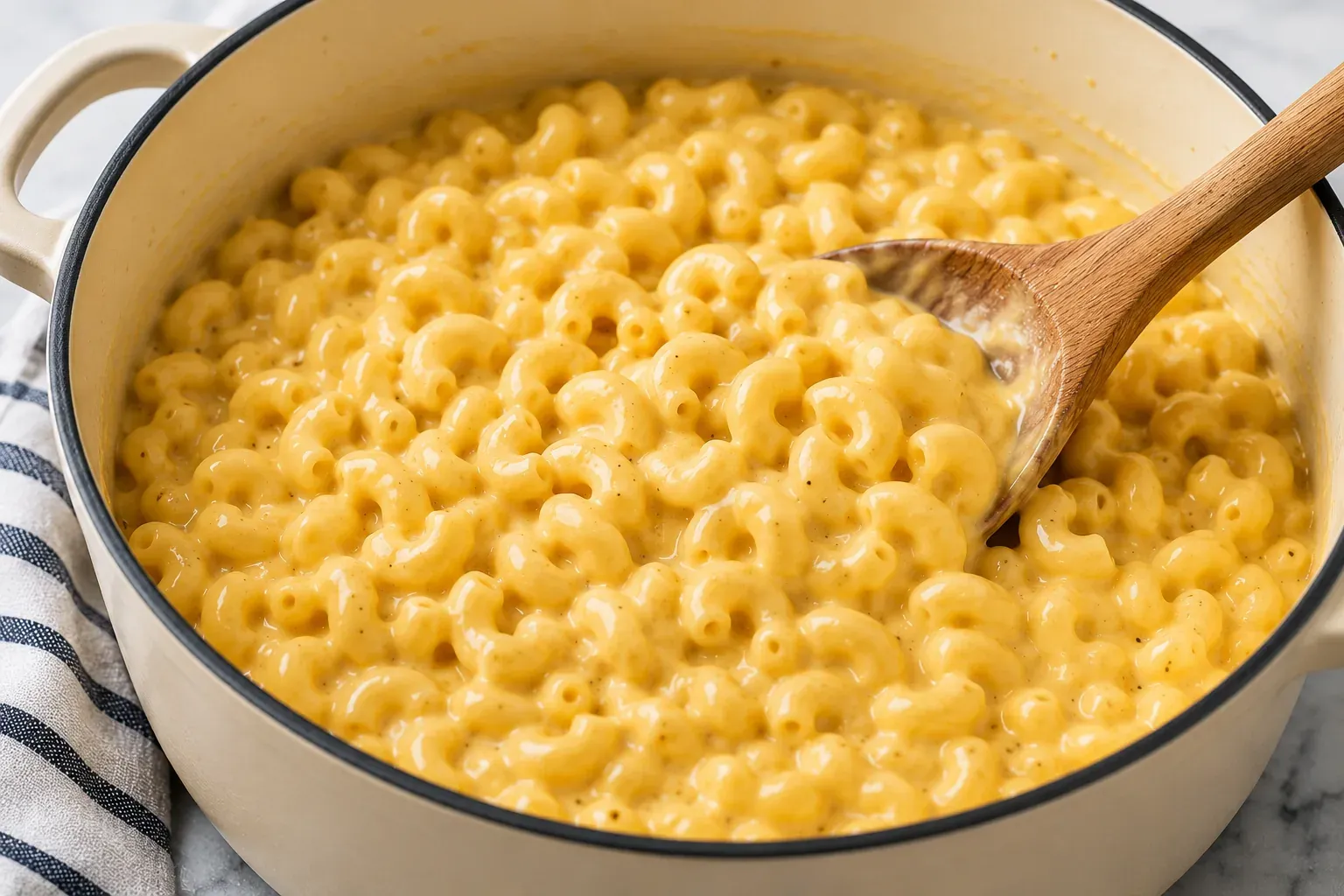
Creamy stovetop macaroni and cheese with a smooth cheddar sauce.
- Measurements grams + cups
- Cuisine American
Why You'll Like This Recipe
- Entirely on the stovetop — no baking, and one pot if you drain the pasta and reuse it.
- A proper roux-based sauce rather than melted cheese, so it stays smooth instead of splitting.
- On the table in about half an hour.
Recipe
Easy Homemade Mac and Cheese
Creamy stovetop mac and cheese with a smooth cheddar sauce.
Ingredients
Ingredients scaled. The method below still refers to the original quantities.
Instructions
- Step 1. Bring a large pot of salted water to a boil. Cook the macaroni until just al dente, then drain.
- Step 2. Return the empty pot to medium heat and melt the butter.
- Step 3. Whisk in the flour and cook for 1 minute.
- Step 4. Slowly pour in the milk while whisking constantly.
- Step 5. Cook for 4-6 minutes, whisking often, until the sauce thickens enough to coat the back of a spoon.
- Step 6. Reduce the heat to low. Add the cheddar, mozzarella, salt, garlic powder, and black pepper.
- Step 7. Stir until the cheese is completely melted and the sauce is smooth.
- Step 8. Add the drained macaroni and stir until evenly coated. Serve immediately.
Notes
- Take the pan off high heat before the cheese goes in. Cheese added to a boiling sauce splits, and once it has split it cannot be brought back.
- Cook the macaroni to just al dente. It keeps softening in the hot sauce, and pasta cooked fully in the water turns soft by the time it reaches the table.
- The sauce should look slightly looser than you want it. It thickens noticeably in the couple of minutes between the pot and the plate.
Easy Homemade Mac and Cheese — Simple Table Recipes · https://simpletablerecipes.com/recipes/easy-homemade-mac-and-cheese/
Ingredient Notes
- Sharp cheddar
- Grate it yourself. Pre-shredded cheese is coated in starch or cellulose to stop it clumping in the bag, and that coating is exactly what makes a cheese sauce turn grainy.
- Milk
- Whole milk gives the richest sauce. Semi-skimmed works but the result is thinner — cook the roux a minute longer to compensate.
- Flour
- Cooked in the butter for a full minute before the milk goes in. That minute cooks out the raw flour taste; skipping it leaves a faint pastiness in the finished sauce.
Equipment
- Large pot
- Colander
- Whisk
- Wooden spoon
- Cheese grater
Substitutions
- Mozzarella or Monterey Jack
- There for stretch rather than flavour. Gruyere gives a nuttier sauce, and a little cream cheese makes it especially smooth.
- Elbow macaroni
- Any short shape with ridges or hollows holds the sauce well — shells, cavatappi and penne all work.
- Baked version
- Transfer to a dish, top with 60 g more grated cheddar and bake at 200 C / 400 F for 15 minutes for a browned top.
Storage
Storing: Refrigerate for up to 4 days. Reheat gently with a splash of milk, stirring, since the sauce firms up considerably when cold.
Frequently Asked Questions
Why is my cheese sauce grainy?
Two usual causes. Pre-shredded cheese carries an anti-caking starch that stops it melting smoothly, so grate your own. And cheese added to a sauce that is too hot will split — take the pan off the heat and stir the cheese in over low heat only.
How do I make mac and cheese creamier?
Use whole milk, keep the sauce slightly looser than you think you need, and serve it promptly. A couple of tablespoons of cream cheese stirred in at the end also helps considerably.
Can I make mac and cheese ahead of time?
It is best fresh, since the sauce tightens as it cools. If you need to make it ahead, undercook the pasta slightly, keep the sauce a little loose, and reheat gently with extra milk.
What cheese is best for mac and cheese?
Sharp cheddar for flavour, with a small amount of a good melting cheese like Monterey Jack or mozzarella for texture. Aged hard cheeses alone can go oily; very mild cheese leaves the dish bland.
Why is my mac and cheese sauce too thin?
Usually the roux was not cooked long enough before the milk went in, or the sauce did not simmer long enough afterwards. It should coat the back of a spoon before the cheese is added — it thickens further from there.
Did you make this?
Let other people know how it went. One tap, nothing to fill in.
Thanks — that helps.