Easy Homemade Dinner Rolls
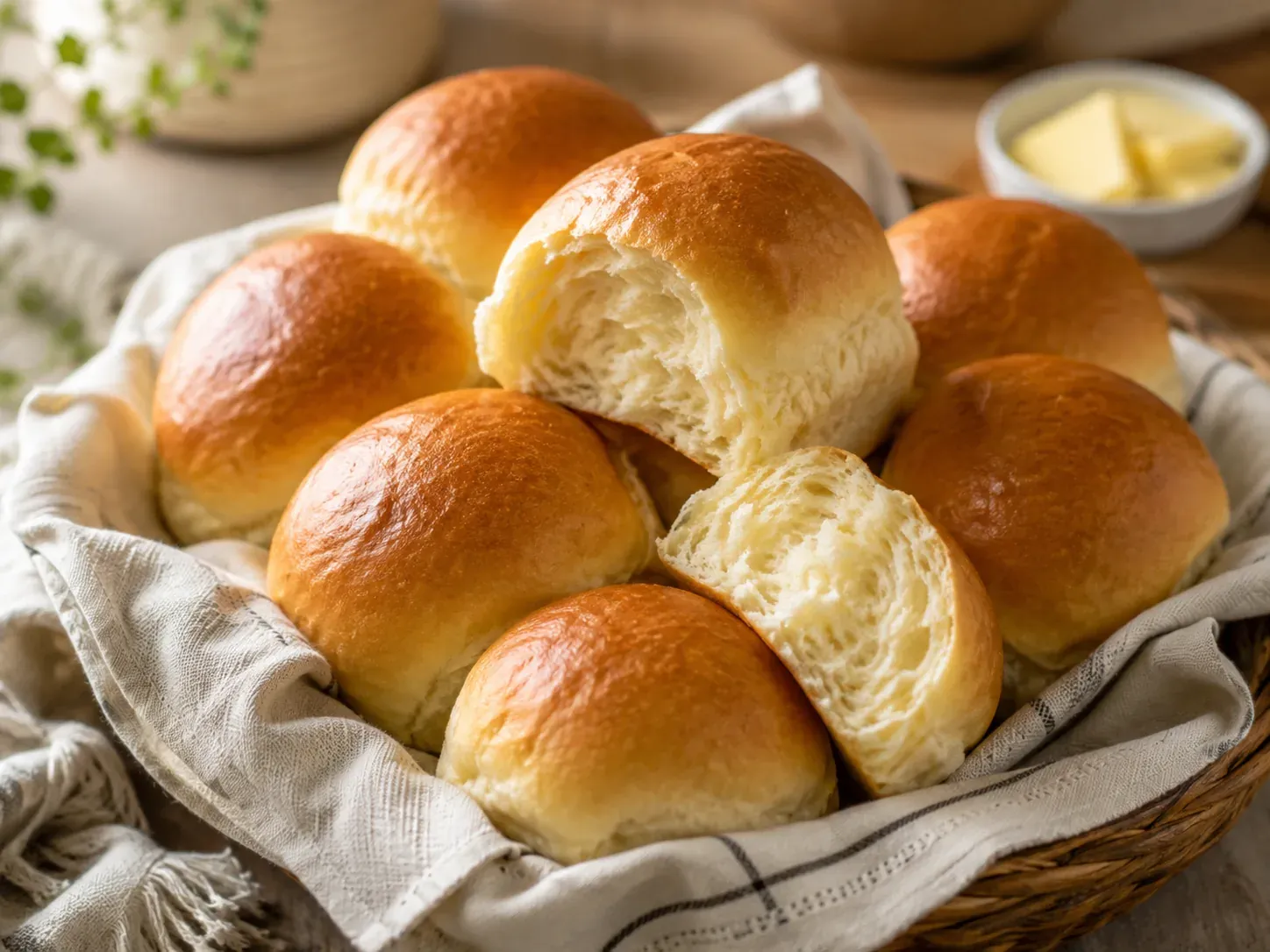
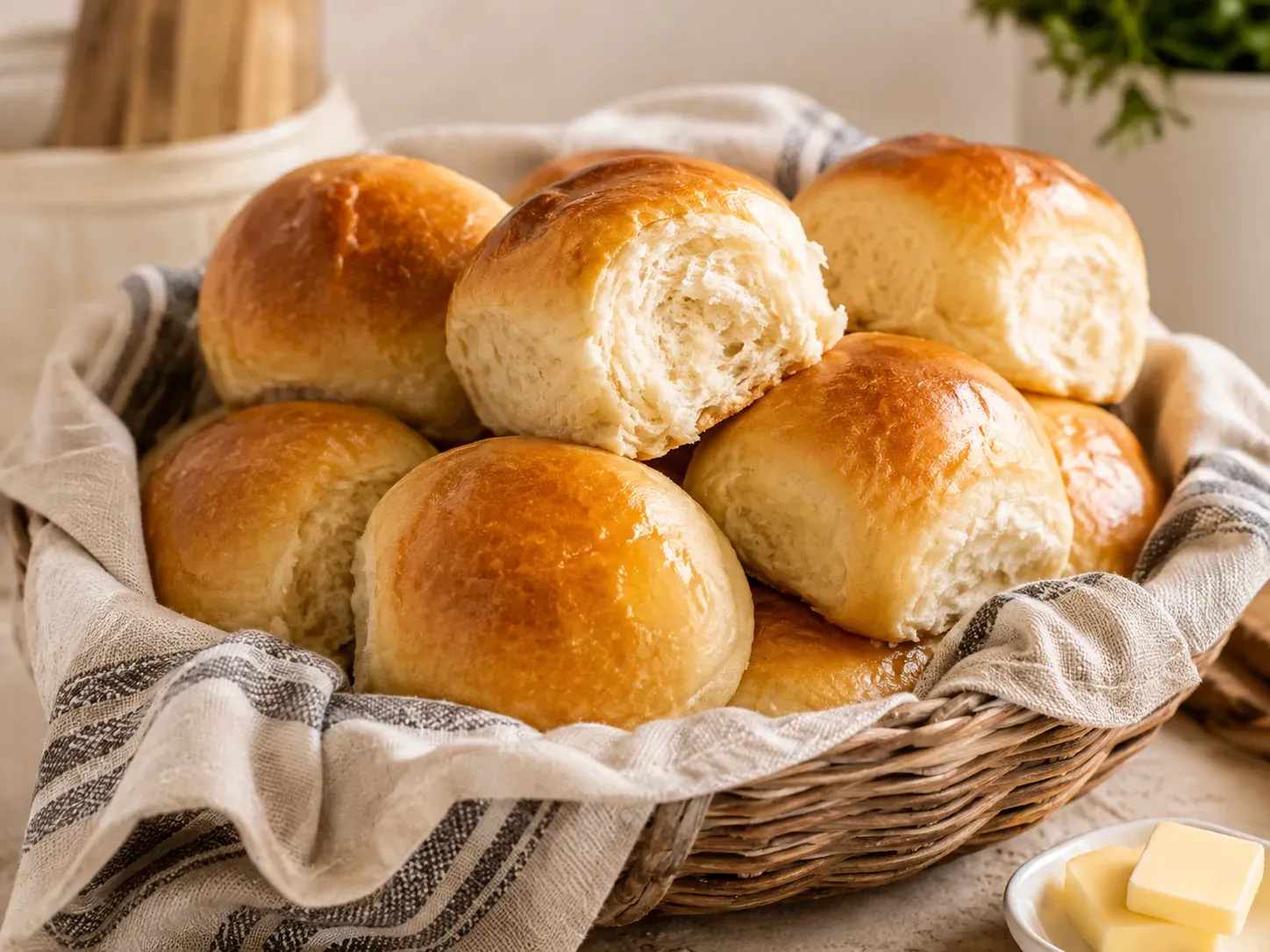
Soft, fluffy pull-apart dinner rolls with a buttery golden top.
- Measurements grams + cups
- Cuisine American
Why You'll Like This Recipe
- Baked close together in one dish, so the sides stay pale and soft and they pull apart.
- Enriched with milk, egg and butter but still straightforward — no special technique.
- The dough can be shaped ahead and given its second rise in the fridge overnight.
Recipe
Easy Homemade Dinner Rolls
Soft pull-apart dinner rolls with buttery golden tops.
Ingredients
Ingredients scaled. The method below still refers to the original quantities.
Instructions
- Step 1. In a large bowl, mix the warm milk, sugar, yeast, egg, and 45 g melted butter.
- Step 2. Add the flour and salt. Mix until a shaggy dough forms.
- Step 3. Knead for 8-10 minutes by hand or 6-8 minutes in a mixer, until smooth and elastic.
- Step 4. Place the dough in a lightly greased bowl, cover, and let rise for 60-75 minutes, until doubled.
- Step 5. Divide the dough into 12 equal pieces and shape each into a smooth ball.
- Step 6. Arrange the rolls in a greased 9 x 13-inch baking dish. Cover and let rise for 30-45 minutes, until puffy.
- Step 7. Preheat the oven to 190 C / 375 F. Bake for 18-22 minutes, until golden brown.
- Step 8. Brush the warm rolls with the remaining melted butter and serve.
Notes
- Weigh the dough and divide by twelve rather than eyeballing it. Uneven rolls bake unevenly, and in a shared dish the small ones dry out before the large ones are done.
- Arrange them with a small gap between each. They expand into one another as they rise, and that contact is what keeps the sides soft.
- Shape the balls by pulling the surface down and pinching underneath. That surface tension is what makes them rise into domes rather than spreading flat.
Easy Homemade Dinner Rolls — Simple Table Recipes · https://simpletablerecipes.com/recipes/easy-homemade-dinner-rolls/
Ingredient Notes
- Warm milk
- About 40 to 43 C / 105 to 110 F — barely warm on the wrist. Milk rather than water is what gives these a soft crumb and a tender crust.
- Egg
- Adds richness and colour, and helps the rolls stay soft for a second day. A roll made without egg is lighter but stales faster.
- Butter for brushing
- Brushed on the moment they come out of the oven, while they are still hot enough for it to soak in rather than sit on top.
Equipment
- Large mixing bowl or stand mixer
- 9 x 13-inch baking dish
- Kitchen scale
- Clean towel or plastic wrap
- Pastry brush
Substitutions
- Milk
- Water works but gives a plainer, less tender roll. Buttermilk gives a slight tang and an especially soft crumb.
- All-purpose flour
- Bread flour gives slightly chewier rolls with a bit more height. All-purpose gives the softer result most people want in a dinner roll.
- Garlic butter finish
- Mix the brushing butter with a crushed garlic clove and chopped parsley for garlic butter rolls.
Storage & Freezing
Storing: Keep covered at room temperature for up to 3 days. Warm briefly before serving to bring the softness back.
Freezing: Freeze baked and cooled rolls for up to 2 months, or freeze them shaped and unbaked in the dish, then thaw overnight in the fridge and give a full rise before baking.
Frequently Asked Questions
Can I make dinner rolls ahead of time?
Yes. Shape the rolls into the dish, cover tightly and refrigerate overnight. Take them out about an hour before baking so they can finish rising at room temperature — cold dough straight into the oven bakes dense.
Why are my dinner rolls dense?
Usually too much flour worked in, or a rise cut short. The dough should stay slightly tacky, and the shaped rolls need to look visibly puffy before they go in. A cool kitchen can add half an hour to both rises.
How do I get soft sides on dinner rolls?
Bake them close together in a dish rather than spaced out on a tray. Where the rolls touch, the sides stay pale and soft, which is what makes them pull apart properly.
Why did my rolls not rise?
Milk that was too hot is the usual culprit — above roughly 50 C / 120 F it starts killing yeast. Yeast past its date is the other. Check by testing a spoonful in warm water with a pinch of sugar; if it does not foam within ten minutes, replace it.
How do I shape dinner rolls into smooth balls?
Cup your hand over the piece of dough and roll it against the worktop, pulling the surface down and tucking it underneath. Pinch the seam closed. That tension is what makes them dome rather than spread.
Can I halve this recipe?
Yes — halve everything and bake six rolls in a 20 cm / 8 inch square dish. Keep the same temperature and start checking a couple of minutes earlier.
Did you make this?
Let other people know how it went. One tap, nothing to fill in.
Thanks — that helps.