Easy Cinnamon Rolls
Soft homemade cinnamon rolls swirled with brown sugar and cinnamon and finished with a simple vanilla glaze.
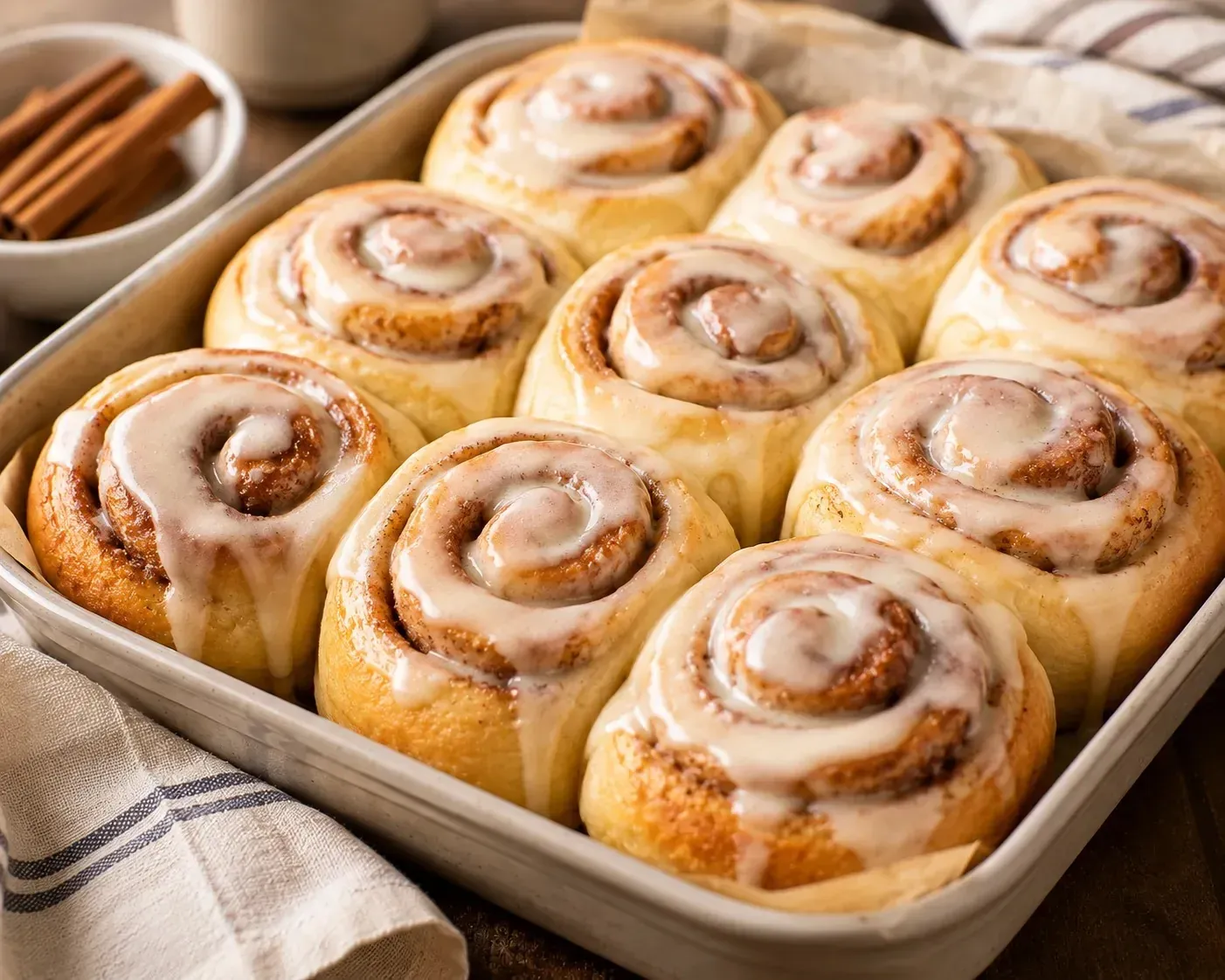
- Measurements grams + cups
- Cuisine American
Why You'll Like This Recipe
- Made with instant yeast, so there is no separate proofing step before you start mixing.
- Everything bakes in one 9 x 13 inch pan, and the rolls press together as they rise for soft sides.
- Finished with a simple vanilla glaze rather than cream cheese frosting, so nothing needs softening in advance.
- The dough can be shaped the night before and baked in the morning.
Recipe
Easy Cinnamon Rolls
Soft cinnamon rolls with brown sugar swirl and vanilla glaze.
Ingredients
Ingredients scaled. The method below still refers to the original quantities.
Instructions
- Step 1. Combine the warm milk, yeast, sugar, melted butter, and egg in a large bowl.
- Step 2. Add the flour and salt. Mix, then knead for 8 to 10 minutes until smooth and slightly tacky.
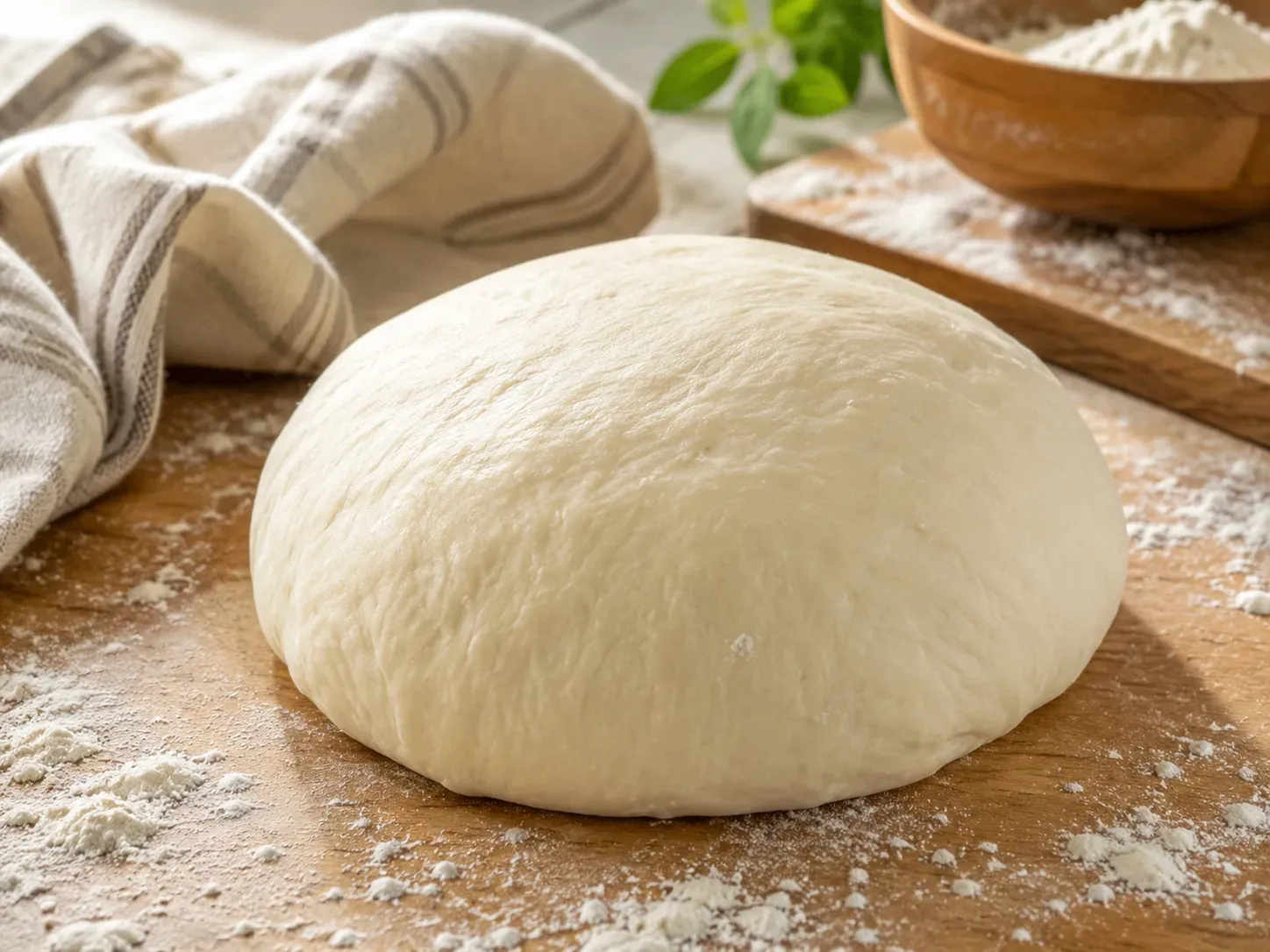
- Step 3. Cover and let rise for about 60 minutes, until doubled.
- Step 4. Roll the dough into a rectangle about 40 x 30 cm / 16 x 12 inches.
- Step 5. Spread the softened butter over the dough. Mix the brown sugar and cinnamon and sprinkle evenly over the butter.
- Step 6. Roll the dough up tightly from a long side and cut into 12 equal rolls.
- Step 7. Place the rolls in a greased 23 x 33 cm / 9 x 13 inch pan. Cover and let rise for 15 to 25 minutes while the oven heats to 180 C / 350 F.
- Step 8. Bake for 20 to 24 minutes, until lightly golden and cooked through.
- Step 9. Whisk the icing sugar, milk, and vanilla until smooth. Drizzle over the warm rolls.
Notes
- For neat slices, use unflavoured dental floss or a very sharp serrated knife to cut the rolled dough. Slide the floss underneath, cross the ends over the top and pull — it cuts cleanly without squashing the spiral.
- Mark the log before cutting rather than eyeballing it. Cut it in half, then each half in half, then each quarter into three. That gives twelve rolls of even size, which matters because uneven rolls bake unevenly.
- The dough should feel slightly tacky at the end of kneading, not dry. Adding flour until it stops sticking is the most common way to end up with dense rolls.
Easy Cinnamon Rolls — Simple Table Recipes · https://simpletablerecipes.com/recipes/easy-cinnamon-rolls/
Ingredient Notes
- Instant yeast
- Instant yeast goes straight into the dry ingredients with no proofing step. Active dry yeast also works, but dissolve it in the warm milk with a pinch of the sugar first and give it 5 to 10 minutes to foam before adding anything else.
- Warm milk
- About 40 C / 105 F, which feels barely warm on the inside of your wrist. Hotter than roughly 50 C / 120 F starts killing yeast, and milk straight from the fridge slows the rise considerably.
- Softened butter for the filling
- Genuinely soft, spreadable butter. Cold butter tears the rolled-out dough, and melted butter runs to the edges and leaks out of the rolls in the oven.
- Brown sugar
- Brown sugar holds moisture and melts into the swirl rather than staying grainy. Granulated sugar works but gives a drier, less caramelly filling.
Equipment
- 23 x 33 cm / 9 x 13 inch pan
- Rolling pin
- Large mixing bowl
- Unflavoured dental floss or a sharp serrated knife
- Kitchen scale
Substitutions
- Cream cheese frosting
- If you would rather have cream cheese frosting, beat 110 g softened cream cheese with 55 g softened butter, 180 g icing sugar and 4 g vanilla. Spread it on rolls that have cooled for about 10 minutes, so it softens without sliding straight off.
- Milk
- Any dairy milk works. Unsweetened almond or oat milk also works in the dough, though the crumb is slightly less tender.
- All-purpose flour
- Bread flour gives a chewier, more structured roll. If you want them as soft as possible, stay with all-purpose.
- Ground cinnamon
- 12 g is a pronounced cinnamon flavour. Reduce to 8 g for something milder, particularly if you are baking for children.
Storage & Freezing
Storing: Keep covered at room temperature for up to 2 days, or refrigerate for up to 5. Warm an individual roll for 15 to 20 seconds in the microwave before serving — they firm up considerably once cool, and a few seconds of heat brings back most of the softness.
Freezing: Freeze baked and cooled rolls, unglazed, for up to 2 months. Thaw at room temperature, warm through in a low oven, then glaze. Unbaked shaped rolls can also be frozen in the pan, then thawed overnight in the fridge and given a full rise at room temperature before baking.
Frequently Asked Questions
Can I make cinnamon rolls the night before?
Yes. Shape the rolls, place them in the pan, cover tightly and refrigerate overnight. In the morning, take the pan out and let it sit at room temperature for 45 to 60 minutes until the rolls look puffy, then bake as written. Cold dough put straight into the oven bakes dense in the middle.
How sticky should cinnamon roll dough be?
Slightly tacky — it should cling to your fingers for a moment and then release, rather than coating them. Dough kneaded until it is completely smooth and dry has usually had too much flour worked in, and that is the most common cause of dense, heavy rolls.
How do I know when the dough has risen enough?
Judge by size rather than the clock. The dough should be roughly doubled after the first rise. Press a finger about 1 cm into it — if the dent stays put, it is ready. If it springs straight back, give it another 15 minutes. A cold kitchen can easily add half an hour.
How do I cut 12 even cinnamon rolls?
Cut the log in half, then cut each half in half, then cut each quarter into three. Use unflavoured dental floss slid under the log and crossed over the top, which cuts without flattening the spiral. A serrated knife works if you saw gently rather than pressing down.
Why did my cinnamon rolls turn out dense?
Usually one of three things — too much flour worked into the dough during kneading, a first rise cut short, or milk hot enough to have damaged the yeast. Dough that never quite doubled will not recover in the oven.
Why is the filling leaking out of my rolls?
Almost always melted rather than softened butter in the filling, which runs before the dough sets. Leaving a 2 cm border of bare dough along the far long edge also helps, so the seam seals against plain dough rather than sliding on sugar.
Can I use active dry yeast instead of instant?
Yes, in the same quantity. Dissolve it in the warm milk with a pinch of the sugar and wait 5 to 10 minutes until it foams before adding the remaining ingredients. If it does not foam at all, the yeast is dead and the dough will not rise.
Do I have to use a 9 x 13 inch pan?
A 23 x 33 cm / 9 x 13 inch pan fits all twelve rolls with a little room to expand into each other, which is what gives them soft sides. A round pan works for eight or nine rolls. Spacing them far apart on a baking sheet gives crisper edges and drier rolls.
Why are my cinnamon rolls dry?
Most often overbaking. At 180 C / 350 F they need 20 to 24 minutes and should come out lightly golden rather than deeply browned. They continue cooking in the hot pan for a few minutes afterwards, so pulling them at the pale end of that range is safer.
Did you make this?
Let other people know how it went. One tap, nothing to fill in.
Thanks — that helps.