Easy One-Pot Creamy Tomato Pasta
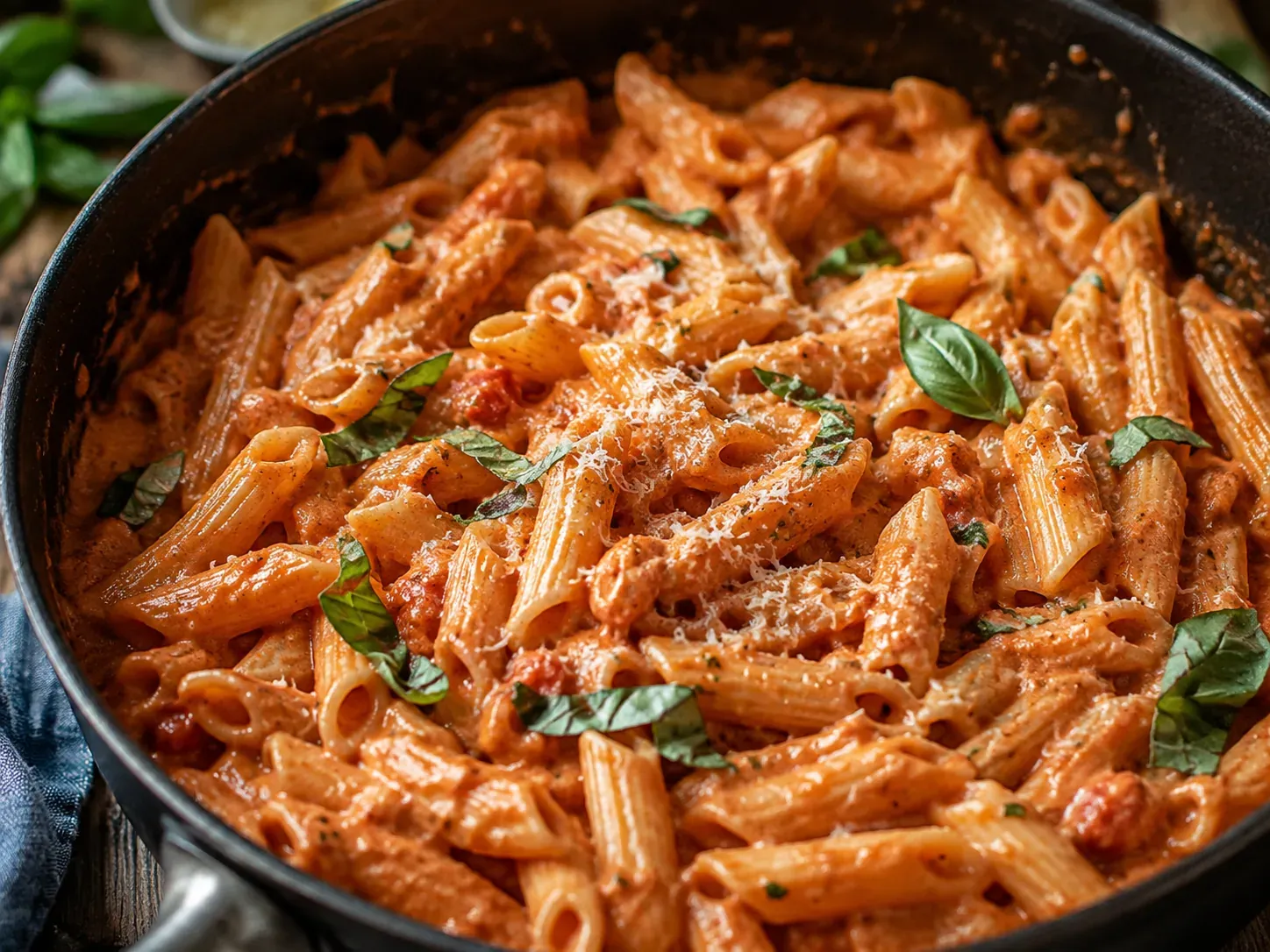
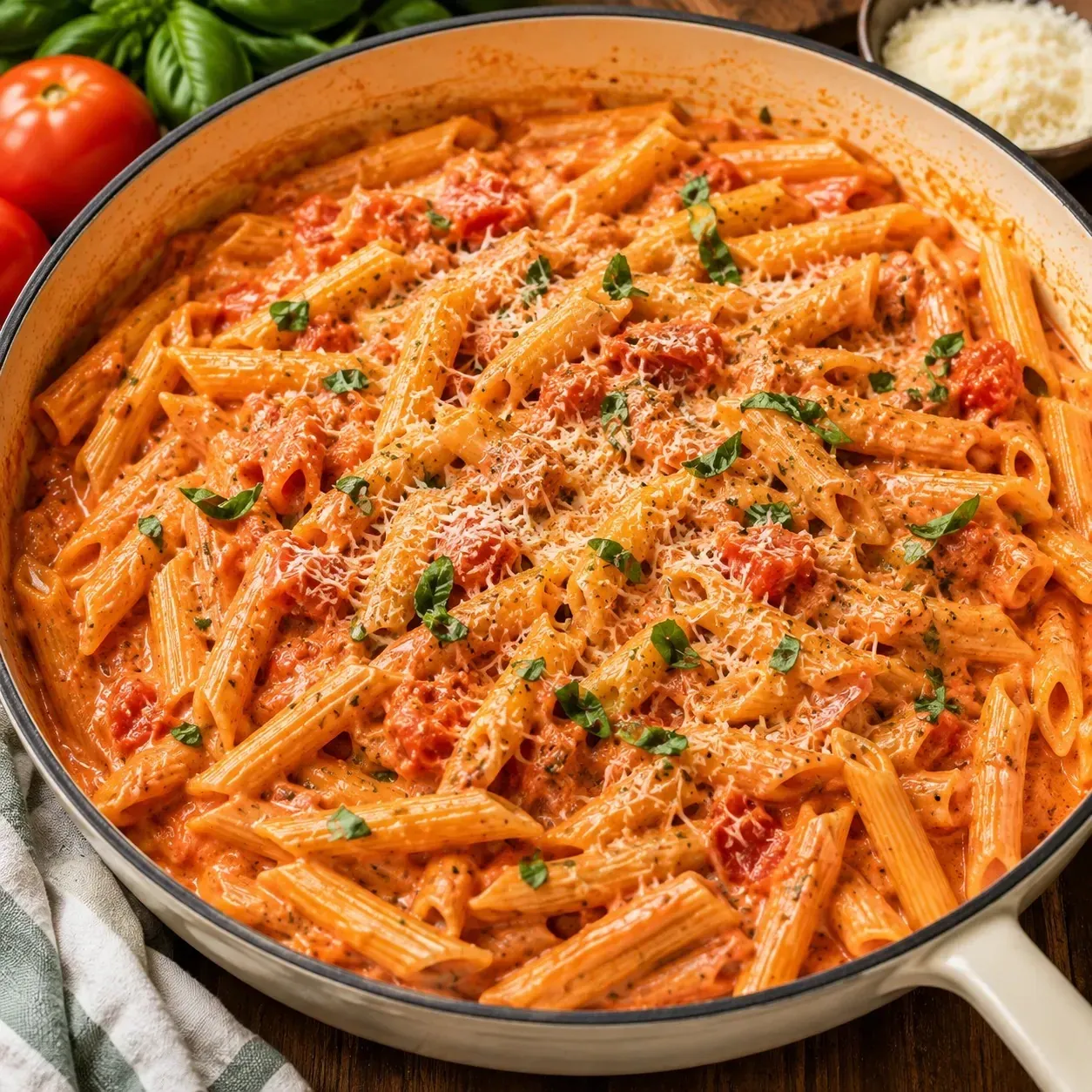
Penne cooked directly in a tomato broth so it absorbs the sauce as it softens, then finished with cream and Parmesan. One pan, no draining.
- Measurements grams + cups
- Cuisine Italian-American
Why You'll Like This Recipe
- The pasta cooks in the sauce, so the starch it releases stays in the pan and thickens everything.
- One pan, no colander, and nothing to drain.
- Built almost entirely from cupboard ingredients.
Recipe
Easy One-Pot Creamy Tomato Pasta
Penne cooked right in the sauce, finished with cream and Parmesan.
Ingredients
Ingredients scaled. The method below still refers to the original quantities.
Instructions
- Step 1. Heat the 15 g olive oil in a large deep skillet or Dutch oven over medium heat.
- Step 2. Add the minced garlic and cook for about 30 seconds, just until fragrant.
- Step 3. Add the diced tomatoes, tomato paste, broth, Italian seasoning, salt and pepper. Stir until the tomato paste is dissolved.
- Step 4. Add the uncooked penne and stir well.
- Step 5. Bring to a gentle boil, then reduce the heat to medium-low.
- Step 6. Cook uncovered for about 12–15 minutes, stirring every few minutes so the pasta does not stick.
- Step 7. Once the pasta is tender and most of the liquid has been absorbed, reduce the heat to low.
- Step 8. Stir in the 120 mL cream and 50 g Parmesan.
- Step 9. Cook for another 1–2 minutes until the sauce is smooth and creamy.
- Step 10. Remove from the heat and serve with fresh basil and extra Parmesan if desired.
Notes
- Stir every couple of minutes. Pasta cooking in a shallow amount of liquid sinks and catches on the base far more readily than pasta in a full pot of water.
- Take it off the heat looser than you want it. The sauce keeps thickening in the minute between pan and plate.
- Taste before serving. Broths vary enormously in saltiness, and the 3 g in the recipe assumes an unsalted or low-salt one.
Easy One-Pot Creamy Tomato Pasta — Simple Table Recipes · https://simpletablerecipes.com/recipes/easy-one-pot-creamy-tomato-pasta/
Ingredient Notes
- Tomato paste
- Small amount, large effect. It concentrates the tomato flavour that canned diced tomatoes alone cannot provide, and it thickens the sauce as the pasta cooks.
- Broth
- The quantity is calculated for 340 g of penne. Different shapes absorb different amounts, so if you switch shapes keep a little extra broth to hand.
- Heavy cream
- Added at the end over low heat. Cream that boils in an acidic tomato sauce can split, and once it has split it will not come back.
Equipment
- Large deep skillet or Dutch oven
- Wooden spoon
- Measuring cups/spoons
- Cheese grater
Substitutions
- Penne
- Any short shape works — rigatoni, fusilli or shells. Long pasta does not, since it will not sit under the liquid.
- Heavy cream
- Evaporated milk or half-and-half work with a slightly thinner result. Cream cheese, about 60 g, gives a thicker sauce and holds together well.
- Parmesan
- Pecorino is sharper and saltier — reduce the added salt if you use it. Grate it yourself either way, since pre-grated cheese carries anti-caking starch that goes grainy.
Storage
Storing: Refrigerate for up to 3 days. The pasta keeps absorbing sauce, so reheat gently with a splash of broth or milk.
Frequently Asked Questions
Can you cook pasta directly in sauce?
Yes, provided there is enough liquid for the pasta to absorb. It works because the starch that would normally go down the sink with the cooking water stays in the pan instead, which is what thickens the sauce and makes it cling.
Why is my one-pot pasta sticking to the pan?
There is much less liquid than in a full pot, so the pasta settles on the base. Stir every two to three minutes and keep the heat at medium-low rather than a rolling boil.
My sauce is too thick — what do I do?
Add a splash of hot broth or water and stir. The sauce should look slightly loose in the pan, because it thickens noticeably as it stands.
Can I add chicken or vegetables?
Yes. Cook diced chicken first, set it aside and return it at the end with the cream. Spinach can be stirred in during the last minute; firmer vegetables like peppers go in with the garlic.
Can I make this dairy free?
Full-fat coconut milk in place of the cream works, and nutritional yeast can stand in for the Parmesan. The result is different but good — the coconut is noticeable against the tomato.
Why did my sauce split or look curdled?
The cream went in while the pan was too hot. Reduce the heat to low before adding it, and never let the sauce boil once the cream is in.
Did you make this?
Let other people know how it went. One tap, nothing to fill in.
Thanks — that helps.