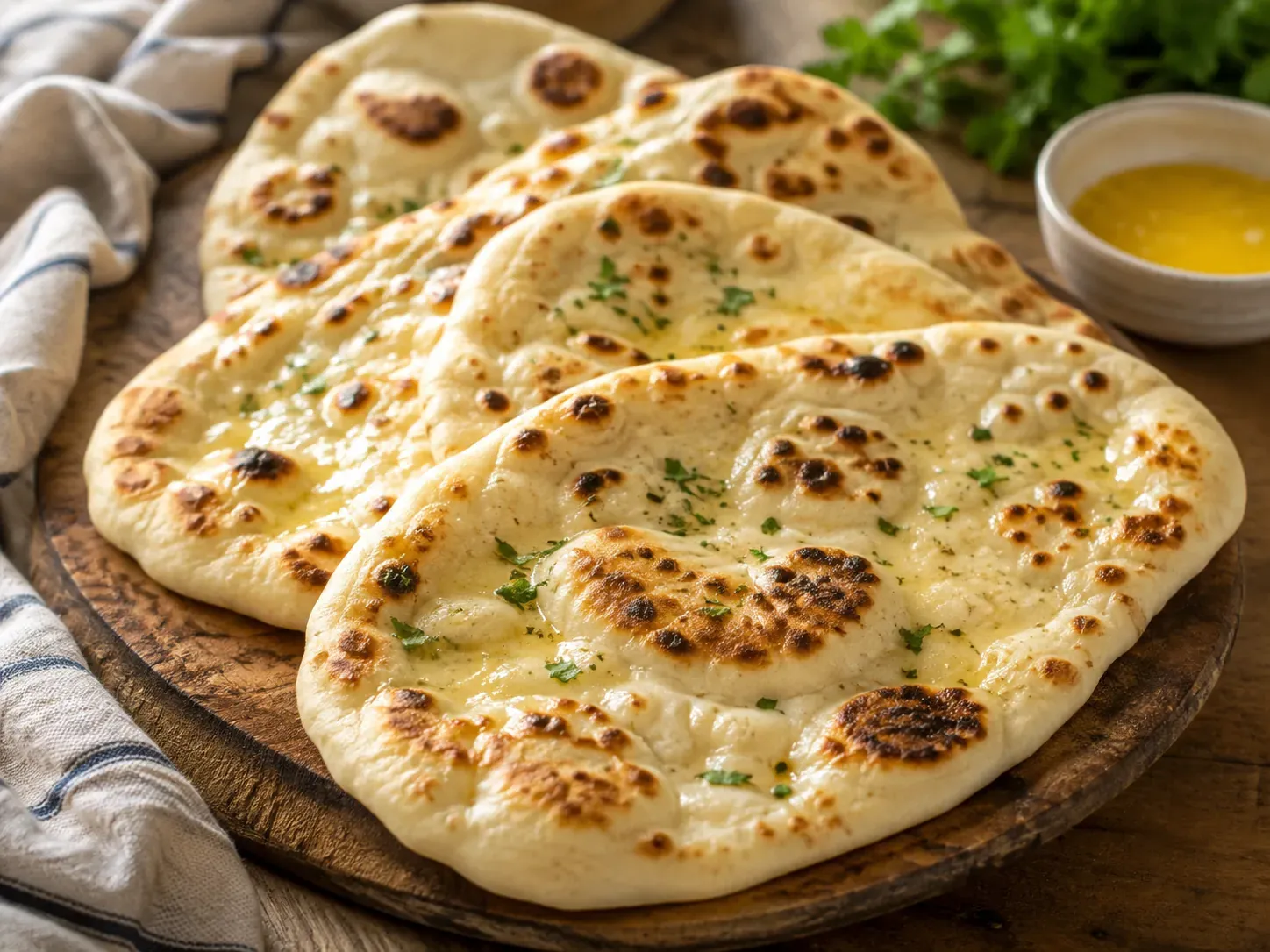
Soft Homemade Pita Bread
Tender stovetop or oven-baked pita that puffs into pockets for sandwiches and dipping.
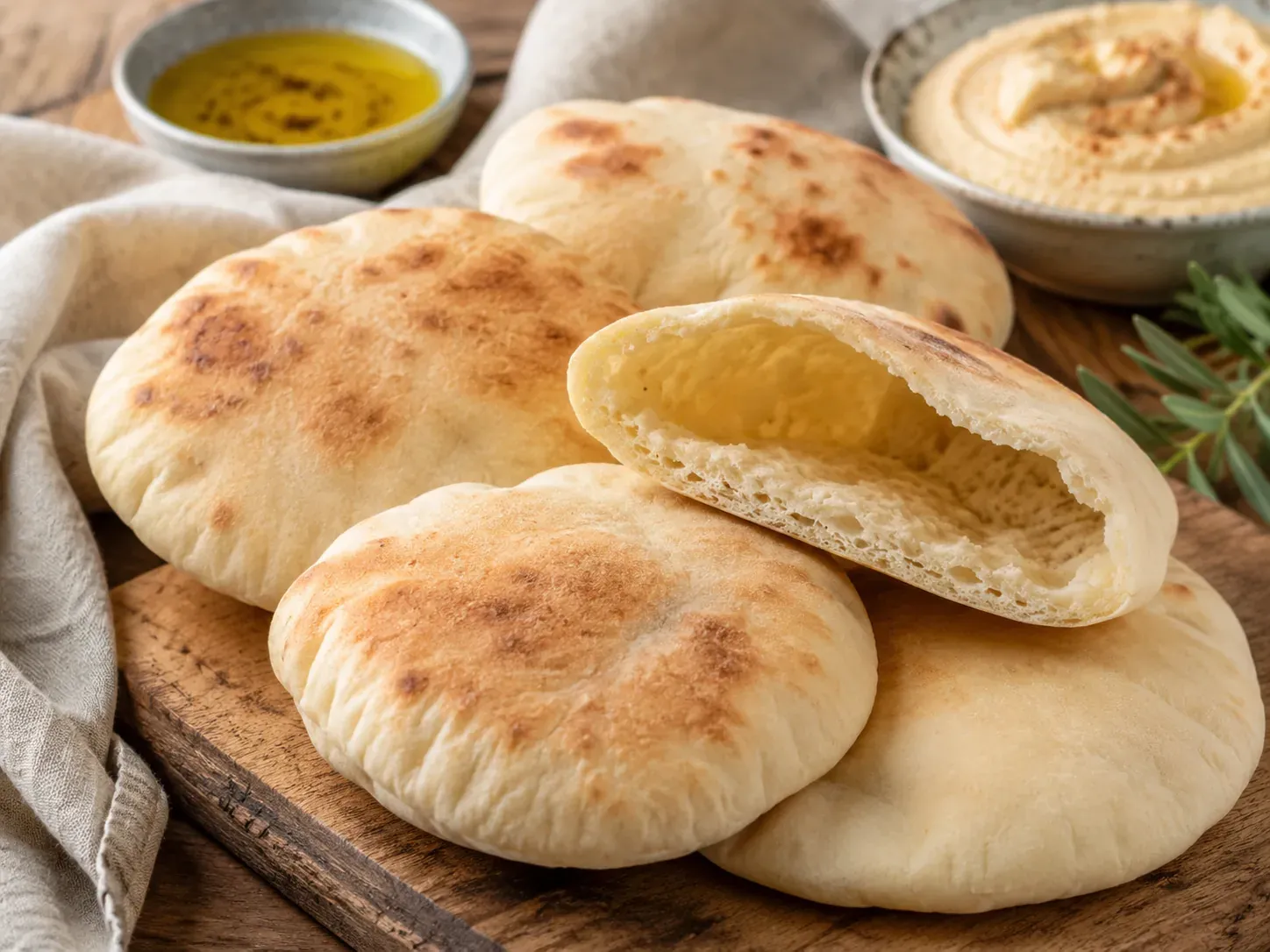
- Measurements grams + cups
Why You'll Like This Recipe
- Cooks on the stovetop in a dry skillet, so no oven needed if you would rather not heat one.
- The pocket forms on its own — it is steam, not technique.
- Eight pitas in about an hour and a half, most of it rising.
Tender stovetop or oven-baked pita that puffs into pockets for sandwiches and dipping.
Recipe
Soft Homemade Pita Bread
Tender stovetop or oven-baked pita that puffs into pockets for sandwiches and dipping.
Ingredients
Ingredients scaled. The method below still refers to the original quantities.
Instructions
- Step 1. Mix the warm water, sugar, yeast, and olive oil in a large bowl.
- Step 2. Add the flour and salt. Knead 6 to 8 minutes until smooth and soft.
- Step 3. Cover and let rise 45 to 60 minutes, until doubled.
- Step 4. Divide into 8 balls. Cover and rest 10 minutes.
- Step 5. Roll each ball into a round about 15 cm / 6 inches wide and 3 to 4 mm thick.
- Step 6. For oven pitas, preheat a baking stone or inverted sheet at 245 C / 475 F. Bake 2 to 4 minutes until fully puffed.
- Step 7. For skillet pitas, cook in a very hot dry skillet about 1 to 2 minutes per side until puffed and spotted.
- Step 8. Stack under a clean towel as they cook so they stay soft.
Notes
- Even thickness is the key to a good pocket. Avoid tearing the rolled dough before baking.
- Roll to an even 3 to 4 mm. Thickness is what decides whether a pocket forms — thin patches let steam escape before pressure can build.
- Stack them under a clean towel as they come off the heat. The trapped steam is what keeps them foldable rather than crisp.
Soft Homemade Pita Bread — Simple Table Recipes · https://simpletablerecipes.com/recipes/soft-homemade-pita-bread/
Ingredient Notes
- Olive oil
- Keeps the pita soft and flexible after cooking. Pita made without any fat sets stiff within minutes.
Equipment
- Rolling pin
- Baking stone or heavy skillet
- Clean tea towel
Substitutions
- All-purpose flour
- Bread flour gives a slightly chewier pita that puffs a little more reliably. Whole wheat can replace up to a third of the flour, though the pockets become less consistent.
Storage & Freezing
Storing: Keep in a sealed bag for 2 to 3 days. Warm briefly in a dry pan or a low oven to soften before serving.
Freezing: Freeze in a stack with parchment between them for up to 3 months. Reheat from frozen in a hot dry pan.
Frequently Asked Questions
Why is my pita not puffing?
Nearly always heat or thickness. The pan or oven must be genuinely hot — steam has to form faster than it can escape. And the dough needs to be rolled evenly at 3 to 4 mm, with no tears. A thin patch or a small hole lets pressure out and the pita stays flat.
Can I make pita without an oven?
Yes. A very hot dry skillet works well — about 1 to 2 minutes per side until puffed and spotted. Stovetop pita browns a little more unevenly than oven-baked, which most people prefer anyway.
Why is my pita hard instead of soft?
Usually overcooking, or letting them cool uncovered. Pull them as soon as they puff and are spotted, and stack them under a towel immediately so they steam each other soft.
Do pitas always have a pocket?
Not always, and a pita that does not puff is still perfectly good bread — use it as a flatbread for dipping or wrapping. The pocket depends on even rolling and high heat, and even a good batch usually has one that refuses.
How thin should I roll pita dough?
About 3 to 4 mm, and 15 cm across. Thicker and the steam cannot lift the whole thing; thinner and it dries out before the pocket forms.
Did you make this?
Let other people know how it went. One tap, nothing to fill in.
Thanks — that helps.