Easy Skillet Flatbread
Soft no-yeast flatbreads cooked in a skillet, flexible enough for wraps, dips and quick lunches.
- Measurements grams + cups
- Cuisine Mediterranean
Why You'll Like This Recipe
- No yeast and no oven, so there is no rise to wait for and nothing to preheat.
- Yogurt does the work — it tenderises the dough and reacts with the baking powder for lift.
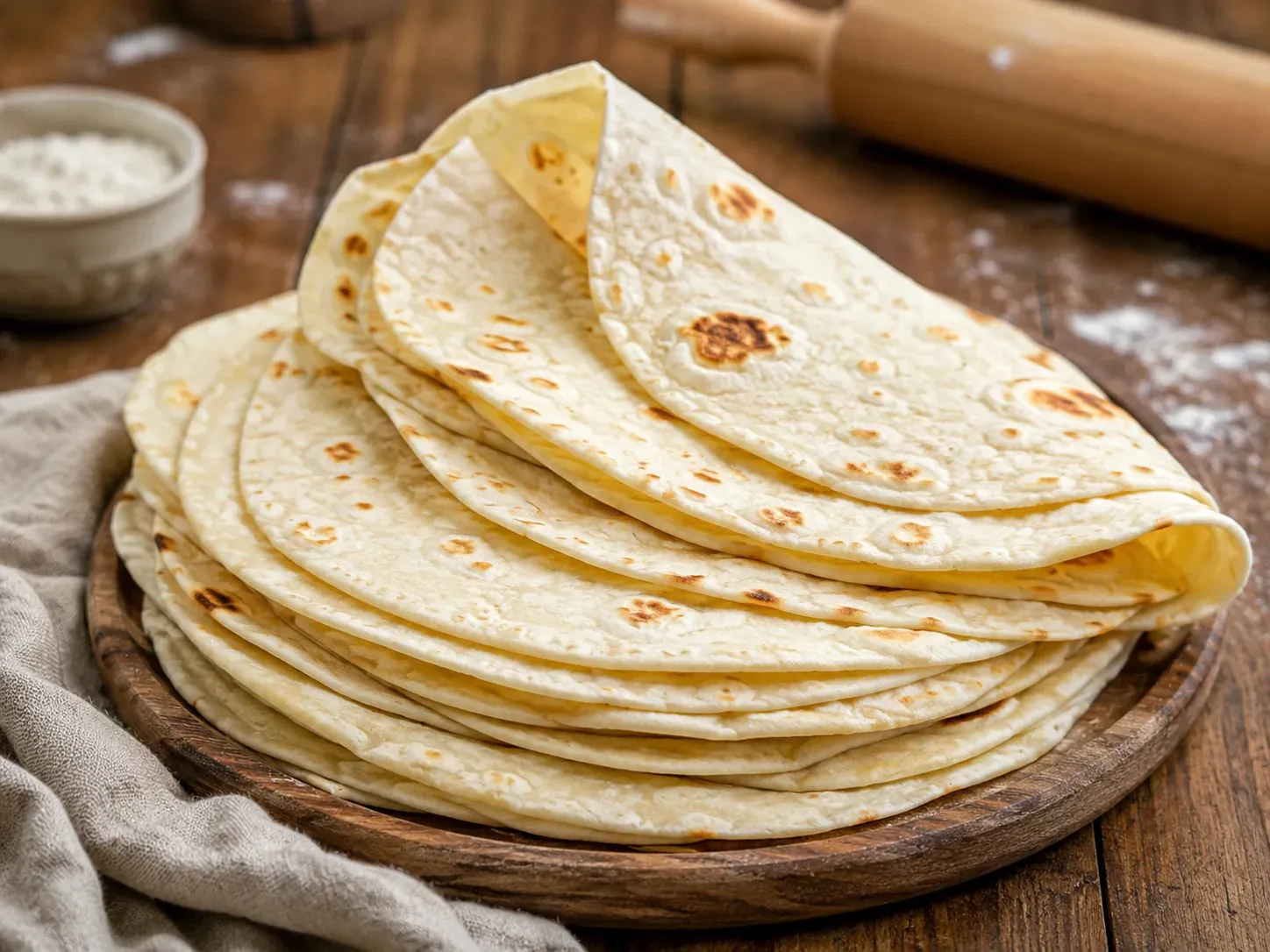
- Soft and flexible rather than crisp, which is what makes them work as wraps.
Recipe
Easy Skillet Flatbread
Soft no-yeast flatbreads, skillet to table in under an hour.
Ingredients
Ingredients scaled. The method below still refers to the original quantities.
Instructions
- Step 1. Whisk the flour, baking powder and salt together.
- Step 2. Add the yogurt, warm water and olive oil. Mix until a soft dough forms.
- Step 3. Knead for 2 to 3 minutes, until mostly smooth. Cover and rest for 20 minutes.
- Step 4. Divide into 8 equal pieces and roll each into a thin round about 18 cm / 7 inches wide.
- Step 5. Heat a dry skillet over medium-high heat.
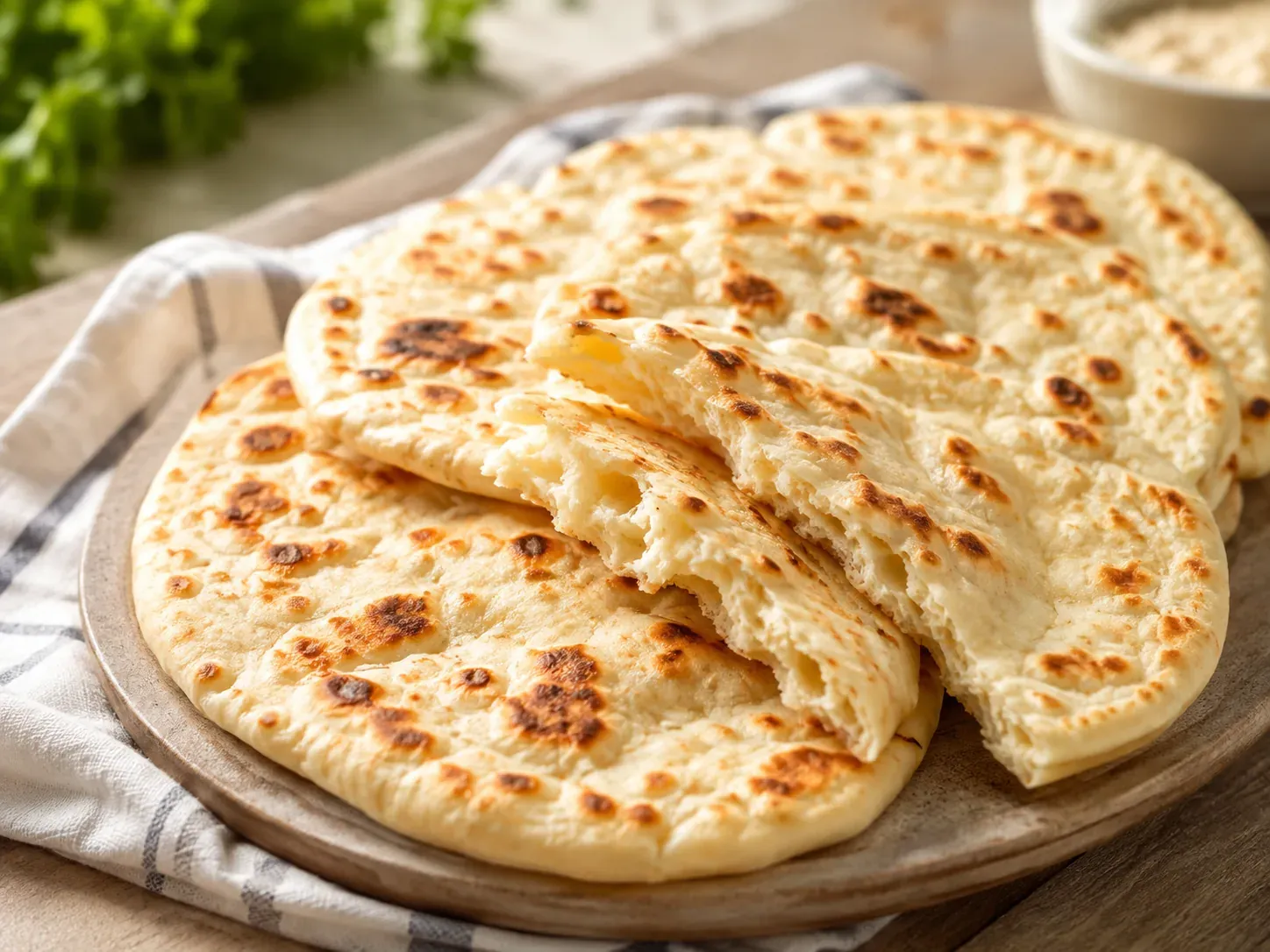
- Step 6. Cook one flatbread at a time for about 60 to 90 seconds on the first side, until bubbles appear and brown spots form.
- Step 7. Flip and cook another 45 to 60 seconds.
- Step 8. Stack the cooked flatbreads under a clean towel so the steam keeps them soft.
Notes
- The twenty-minute rest is not optional. It lets the flour hydrate and the gluten relax, and dough rolled straight after mixing springs back and tears.
- Get the pan properly hot before the first one goes in. High heat makes the bubbles that give the soft interior; a moderate pan dries the bread out before it browns.
- Stack them under a towel as they come off. The trapped steam is what keeps them flexible — left in the open air they stiffen within minutes.
Easy Skillet Flatbread — Simple Table Recipes · https://simpletablerecipes.com/recipes/easy-skillet-flatbread/
Ingredient Notes
- Greek yogurt
- Thick yogurt rather than runny. It provides most of the liquid, tenderises the dough with its acidity, and reacts with the baking powder to give a little lift. Thin yogurt makes a slack dough that is hard to roll.
- Baking powder
- The only leavening here. Two and a half teaspoons sounds like a lot for 300 g of flour, but there is no rise to build gas slowly — it all has to happen in the pan.
- No yeast
- Which is the point. This is the flatbread you make when dinner is in forty minutes and you have not started.
Equipment
- Mixing bowl
- Rolling pin
- Heavy skillet or cast-iron pan
- Clean tea towel
Substitutions
- Greek yogurt
- Plain thick yogurt works, or sour cream. Dairy-free coconut yogurt works if it is the thick kind.
- Finishing
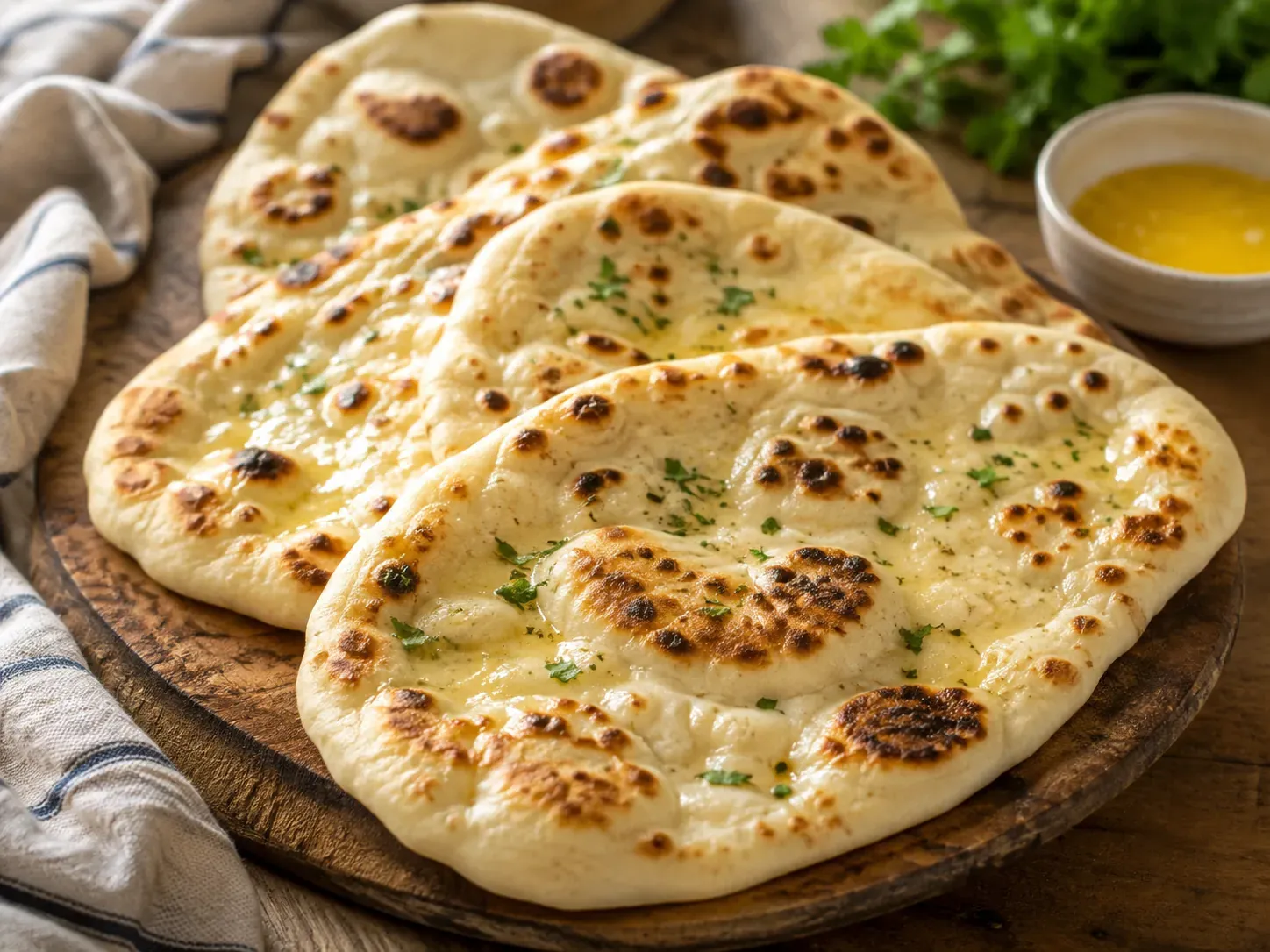
- Brush with garlic butter or olive oil while warm for a side bread, or scatter with za'atar or flaky salt.
- Shape
- Roll them smaller and thicker for pitta-style pockets, or larger and thinner for wraps.
Storage & Freezing
Storing: Best the day they are made. Keep wrapped at room temperature for 2 days and warm briefly in a dry pan to bring back the softness.
Freezing: Freeze cooked and cooled flatbreads with parchment between them for up to 2 months. Reheat in a dry pan straight from frozen.
Frequently Asked Questions
Can you make flatbread without yeast?
Yes — this recipe uses baking powder and yogurt instead. The acidity in the yogurt reacts with the baking powder for lift, so there is no rise to wait for and the whole thing takes under an hour.
Why are my flatbreads dry and stiff?
Usually too much flour worked in while rolling, or a pan that was not hot enough so they cooked slowly and dried out. Use a light dusting only, and stack them under a towel as they come off the heat.
Why didn't my flatbread puff up?
The pan was too cool, or the dough was rolled unevenly. High heat turns the moisture in the dough to steam quickly, and that steam is what lifts the layers. A little charring is a good sign.
Can I use regular yogurt instead of Greek?
Yes, but hold back some of the water. Regular yogurt is much looser and the dough will be too slack to roll if you add the full amount.
What do you serve skillet flatbread with?
Hummus and dips, curry, grilled meat, or as a wrap. They are soft and flexible rather than crisp, so they fold without cracking.
Can I make the dough ahead?
Yes. Refrigerate the covered dough for up to 24 hours and let it sit at room temperature for 20 minutes before rolling. The baking powder loses a little power over that time but not enough to matter.
Did you make this?
Let other people know how it went. One tap, nothing to fill in.
Thanks — that helps.