Fluffy Buttermilk Biscuits
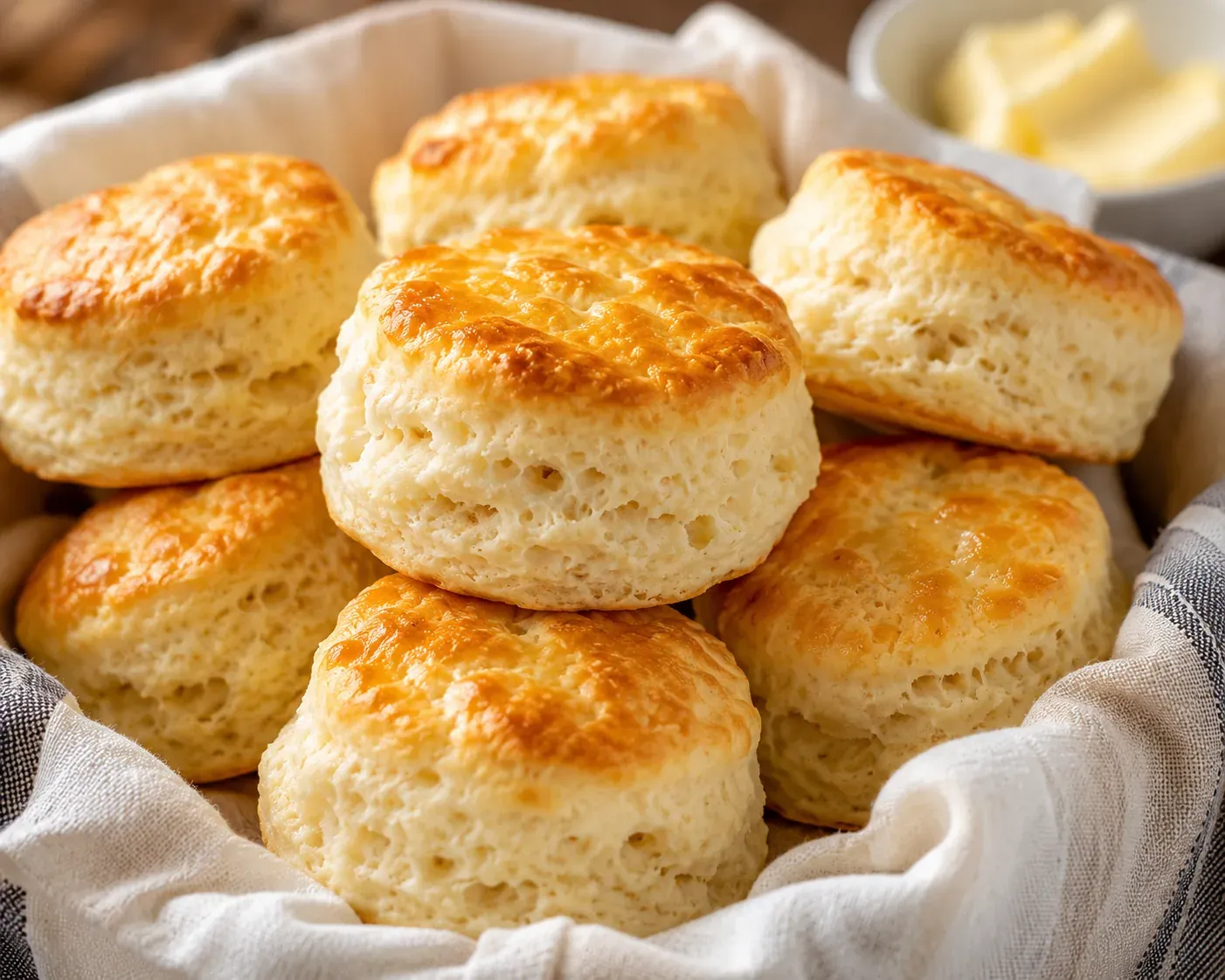
Tall, tender biscuits with flaky layers and a buttery golden crust.
- Measurements grams + cups
- Cuisine American
Why You'll Like This Recipe
- No yeast and no rising — thirty minutes from cupboard to table.
- The two folds are what create the flaky layers, and they take about a minute.
- Tall, with sides that pull apart in sheets.
Recipe
Fluffy Buttermilk Biscuits
Tall, flaky buttermilk biscuits with buttery golden tops.
Ingredients
Ingredients scaled. The method below still refers to the original quantities.
Instructions
- Step 1. Preheat the oven to 220 C / 425 F. Line a baking sheet with parchment paper.
- Step 2. Whisk together the flour, baking powder, baking soda, salt, and sugar.
- Step 3. Cut the cold butter into the flour mixture until pea-sized pieces remain.
- Step 4. Pour in the cold buttermilk and stir gently just until a shaggy dough forms.
- Step 5. Turn the dough onto a lightly floured surface. Pat into a rectangle, fold it in thirds, and repeat the fold once more.
- Step 6. Pat the dough to about 2.5 cm / 1 inch thick and cut out 8 biscuits.
- Step 7. Place the biscuits close together on the baking sheet and brush the tops with buttermilk.
- Step 8. Bake for 12-16 minutes, until tall and golden brown. Serve warm.
Notes
- Handle the dough as little as possible and work fast. Warm hands melt butter, and melted butter means flat biscuits.
- Push the cutter straight down and lift it straight out. Twisting it seals the cut edges together and the biscuit cannot rise up the sides.
- Place the biscuits so they touch. They support each other as they rise, which is how you get height rather than spread.
Fluffy Buttermilk Biscuits — Simple Table Recipes · https://simpletablerecipes.com/recipes/fluffy-buttermilk-biscuits/
Ingredient Notes
- Very cold butter
- Cold is not a preference here, it is the mechanism. Pieces of solid butter melt in the oven and release steam, and that steam is what pushes the layers apart. Butter that has warmed and blended into the flour gives a scone-like biscuit with no layers at all.
- Cold buttermilk
- The acid reacts with the baking soda for lift, and keeping it cold stops the butter softening while you mix.
- Baking powder and baking soda together
- Powder does most of the lifting; the soda is there to react with the buttermilk acid and help the tops brown.
Equipment
- Baking sheet
- Parchment paper
- Large mixing bowl
- Pastry cutter or fork
- Biscuit cutter
Substitutions
- Buttermilk
- If you have none, stir 15 mL lemon juice or white vinegar into 180 mL milk and leave it 5 minutes. It is not identical but it works.
- Biscuit cutter
- A drinking glass works if you flour the rim, though the blunt edge seals the sides slightly. A knife cutting squares avoids the problem entirely and leaves no scraps.
- Unsalted butter
- Salted butter works — drop the added salt to about 3 g.
Storage & Freezing
Storing: Best warm from the oven. Keep leftovers in an airtight container for 2 days and reheat in a hot oven rather than a microwave.
Freezing: Freeze cut, unbaked biscuits on a tray, then bag them. Bake from frozen, adding 3 to 5 minutes.
Frequently Asked Questions
Why are my biscuits flat?
Butter that got warm, or a cutter that was twisted. Cold butter is what makes them rise, and twisting the cutter seals the cut edge so the layers cannot climb. Push straight down, lift straight up.
How do I get flaky layers in biscuits?
The folding. Pat the dough into a rectangle, fold it in thirds like a letter, then repeat. Each fold stacks sheets of butter and dough, and those sheets become the layers you pull apart.
Can I make buttermilk biscuits without buttermilk?
Yes. Stir a tablespoon of lemon juice or white vinegar into 180 mL of milk and let it stand five minutes. The acidity is what the baking soda needs, and this gets close enough.
Why are my biscuits tough?
Overworking the dough. It should look shaggy and barely held together when you turn it out. Kneading it smooth develops gluten and gives a dense, bready biscuit.
Should biscuits touch on the baking sheet?
Yes, if you want height. Biscuits placed touching support each other and rise upward. Spaced apart, they spread outward and bake with crisp sides instead of soft ones.
Can I make biscuit dough ahead?
Cut them, freeze them raw on a tray, then bag them. Bake straight from frozen with a few extra minutes. Refrigerated raw dough is less successful — the leavening starts working as soon as the buttermilk hits it.
Did you make this?
Let other people know how it went. One tap, nothing to fill in.
Thanks — that helps.