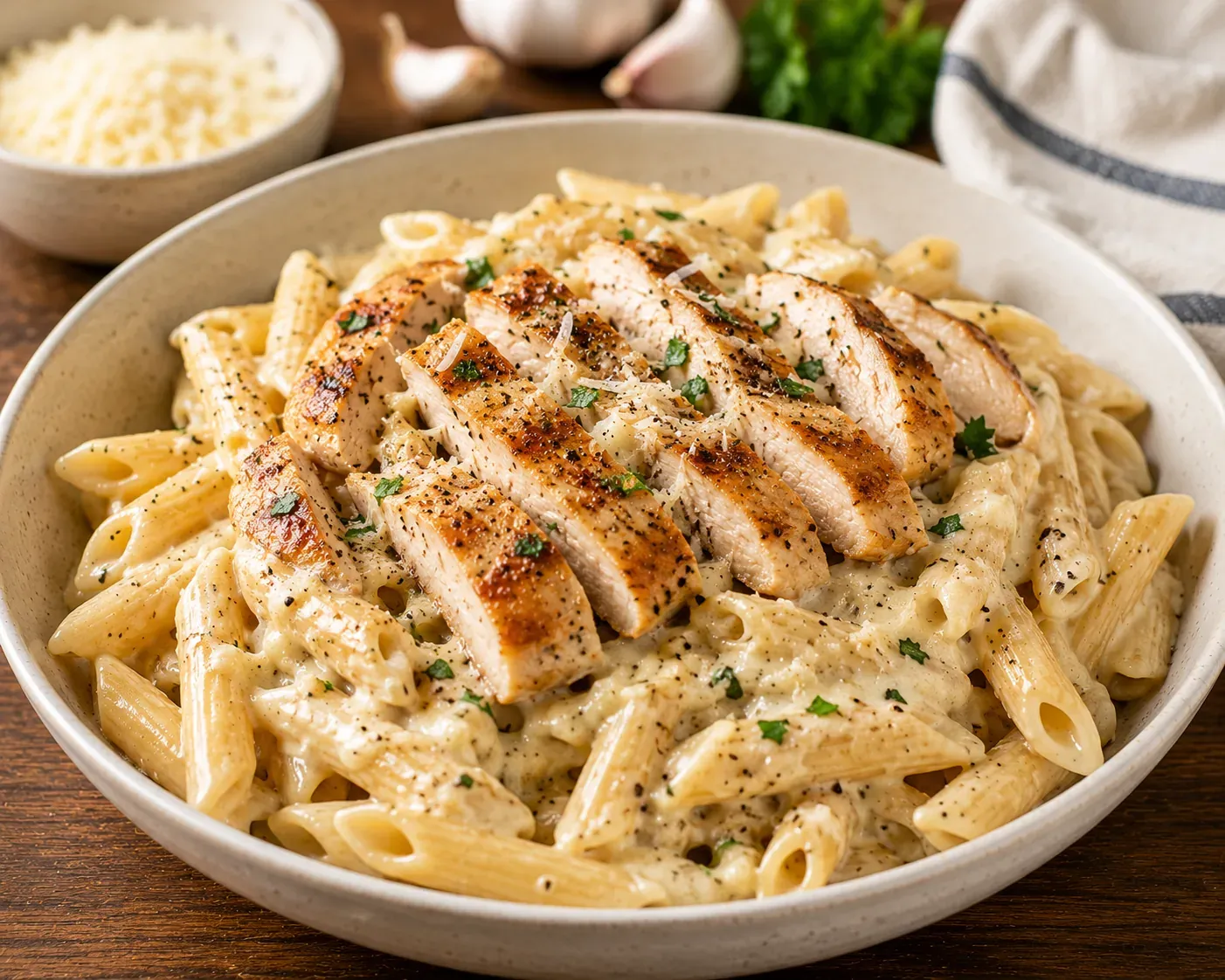
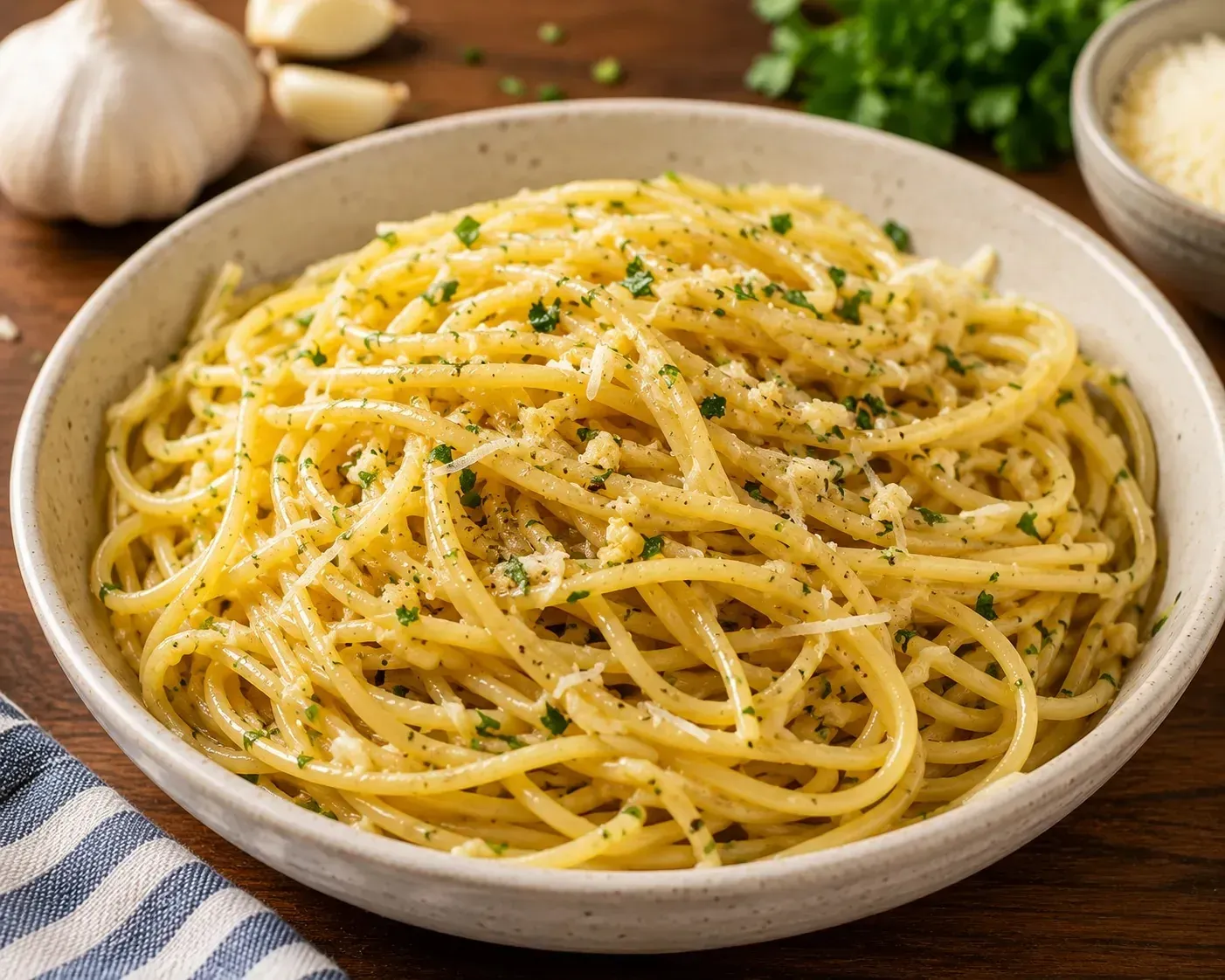
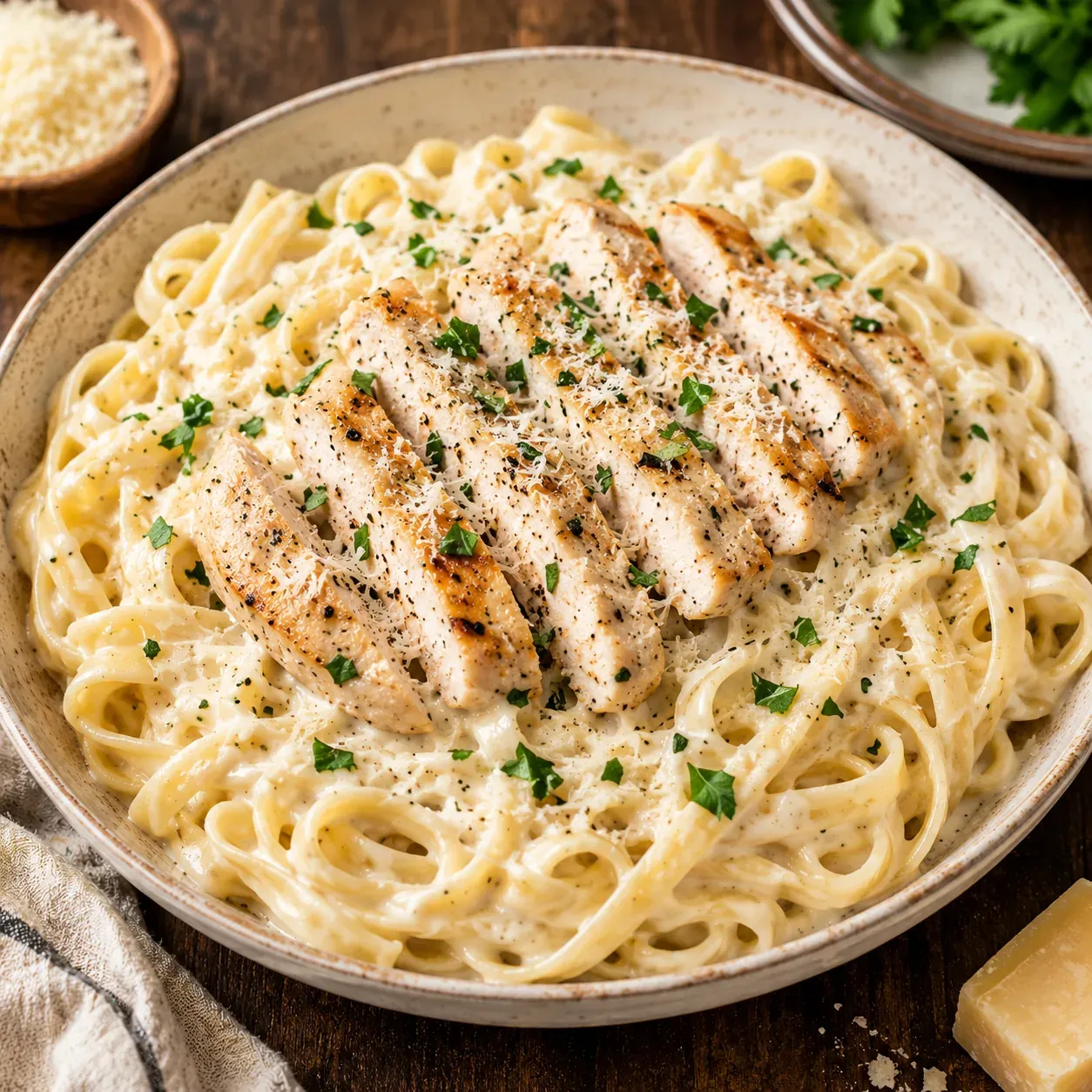
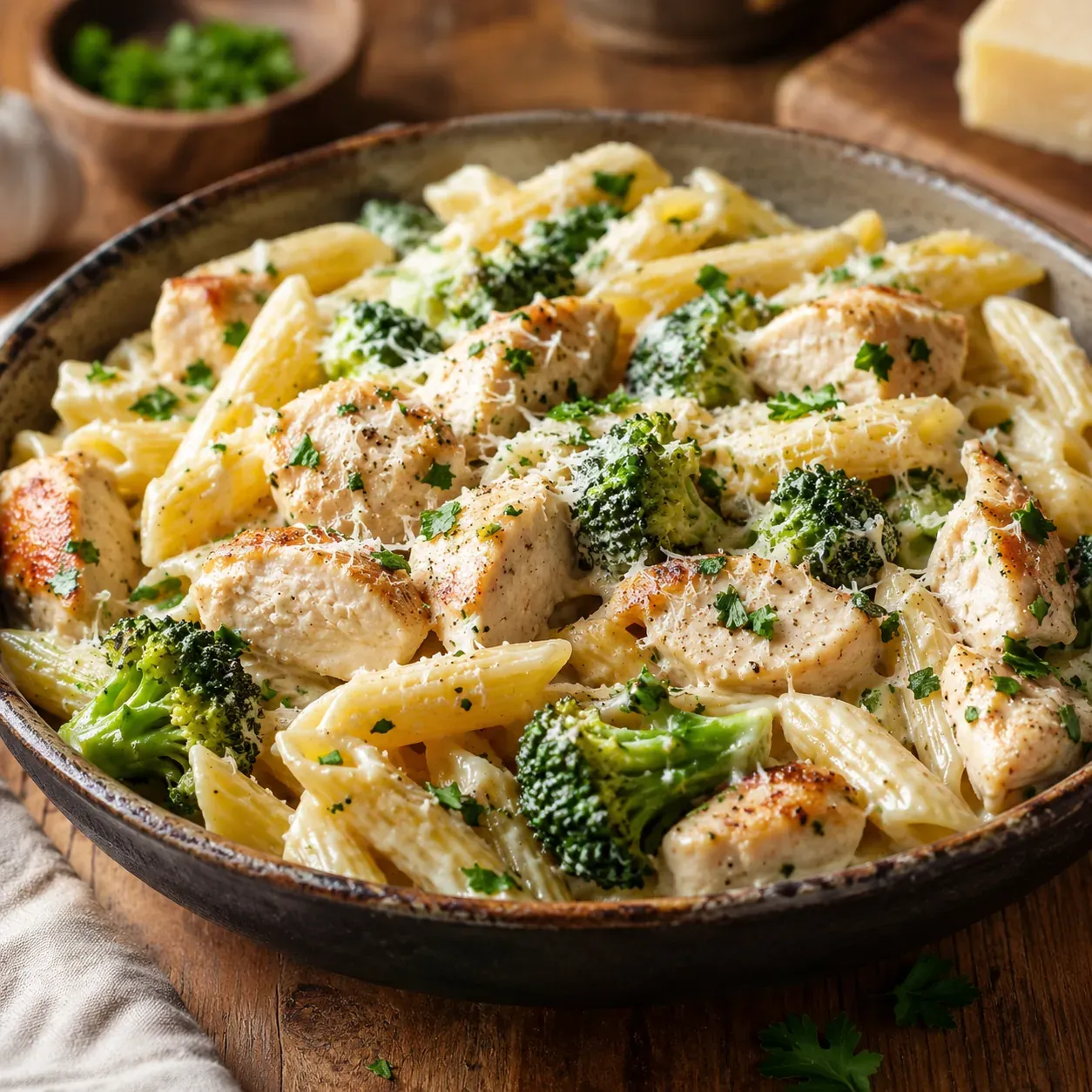
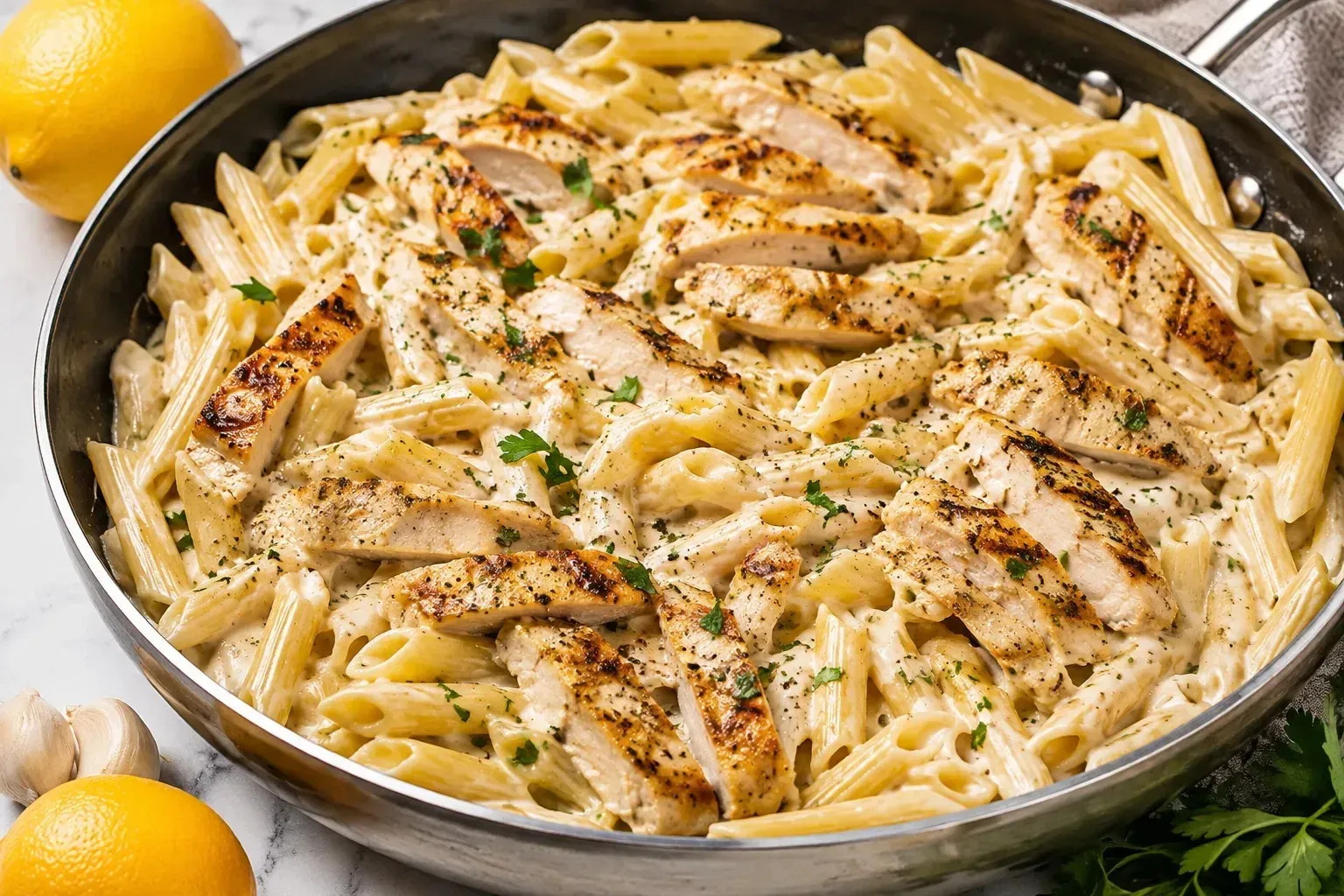
Creamy Garlic Parmesan Pasta
Silky garlic Parmesan pasta with a rich cream sauce that comes together while the pasta cooks.
- Measurements grams + cups
- Cuisine Italian-American
Why You'll Like This Recipe
- The sauce is made in the time it takes the pasta to boil.
- Five ingredients doing the work, none of them unusual.
- A base for almost anything — chicken, shrimp, peas, spinach.
Recipe
Creamy Garlic Parmesan Pasta
Silky garlic Parmesan pasta in 25 minutes.
Ingredients
Ingredients scaled. The method below still refers to the original quantities.
Instructions
- Step 1. Bring a large pot of salted water to a boil. Cook the pasta until al dente. Reserve at least 120 g of the cooking water, then drain.
- Step 2. While the pasta cooks, melt the butter in a large skillet over medium-low heat.
- Step 3. Add the garlic and cook for 30 to 45 seconds until fragrant without browning.
- Step 4. Pour in the cream and bring to a gentle simmer. Cook for 3 minutes.
- Step 5. Reduce the heat to low and stir in the Parmesan a little at a time until smooth. Season with salt and pepper.
- Step 6. Add the drained pasta and toss until coated. Add reserved pasta water a little at a time if needed to loosen the sauce.
- Step 7. Serve immediately with extra Parmesan and parsley if desired.
Notes
- Keep the heat low after adding the Parmesan. High heat can cause the cheese to separate and make the sauce grainy.
- Take the pan off high heat before the Parmesan goes in, and add it gradually. Cheese dumped into a hot sauce clumps or splits, and it cannot be rescued.
- Serve immediately. Cream and Parmesan sauces tighten fast, and this one is at its best within a couple of minutes of the pasta going in.
- Salt the pasta water properly. It is the only seasoning the pasta itself gets.
Creamy Garlic Parmesan Pasta — Simple Table Recipes · https://simpletablerecipes.com/recipes/creamy-garlic-parmesan-pasta/
Ingredient Notes
- Parmesan, finely grated
- Grate it yourself and grate it fine. Pre-grated Parmesan carries anti-caking cellulose that will not melt smoothly, and coarsely grated cheese takes longer to dissolve and can clump.
- Reserved pasta water
- Starchy, salty and the most useful thing in the recipe. It loosens the sauce without thinning the flavour, and the starch helps it cling to the pasta. Always reserve more than you think you need.
- Garlic
- Cooked for well under a minute over medium-low heat. Browned garlic turns bitter and the whole sauce carries it.
Equipment
- Large pot
- Large skillet
Substitutions
- Heavy cream
- Half-and-half works with a thinner result. Whole milk needs help — whisk 15 g of flour into the butter before the milk goes in to make a light roux.
- Parmesan
- Pecorino Romano is sharper and saltier, so reduce the added salt. Grana Padano is milder and slightly cheaper.
- Additions
- Cooked chicken, shrimp, peas, spinach or sauteed mushrooms all fold in at the end. Add them once the sauce is finished so they warm through rather than cook.
Storage
Storing: Best fresh. Refrigerate for up to 2 days and reheat gently with a splash of milk or cream, stirring, since the sauce firms up considerably when cold.
Frequently Asked Questions
Why is my Parmesan sauce grainy?
Either the heat was too high when the cheese went in, or the Parmesan was pre-grated. Add cheese off the boil, a handful at a time, over low heat — and grate it yourself, since the anti-caking agents in pre-grated cheese prevent smooth melting.
What is pasta water for?
It is starchy and salty, so it loosens a thick sauce without watering down the flavour, and the starch helps the sauce cling to the pasta rather than sliding off. Reserve a cup before draining, every time.
Can I make garlic Parmesan pasta without cream?
Yes. Whisk 15 g of flour into the melted butter, cook it a minute, then add 300 g of whole milk slowly to make a light béchamel. It is not quite as rich but it works well.
Why did my cream sauce split?
Too much heat, usually after the cheese went in. Keep the pan at low once the Parmesan is added and never let it boil. A split sauce can sometimes be brought back with a splash of cold cream whisked in off the heat.
What pasta shape is best?
Long flat shapes like fettuccine or linguine hold a cream sauce best. Short shapes work — ridged ones like rigatoni grip better than smooth penne.
How do I make the sauce thicker?
Simmer the cream a minute or two longer before the cheese goes in, or add a little more Parmesan. Avoid reducing it after the cheese is in, since that is when it splits.
Did you make this?
Let other people know how it went. One tap, nothing to fill in.
Thanks — that helps.