Garlic Butter Noodles
Pasta tossed in butter, garlic and Parmesan, loosened with a splash of the cooking water so the sauce clings instead of sitting in the bowl.
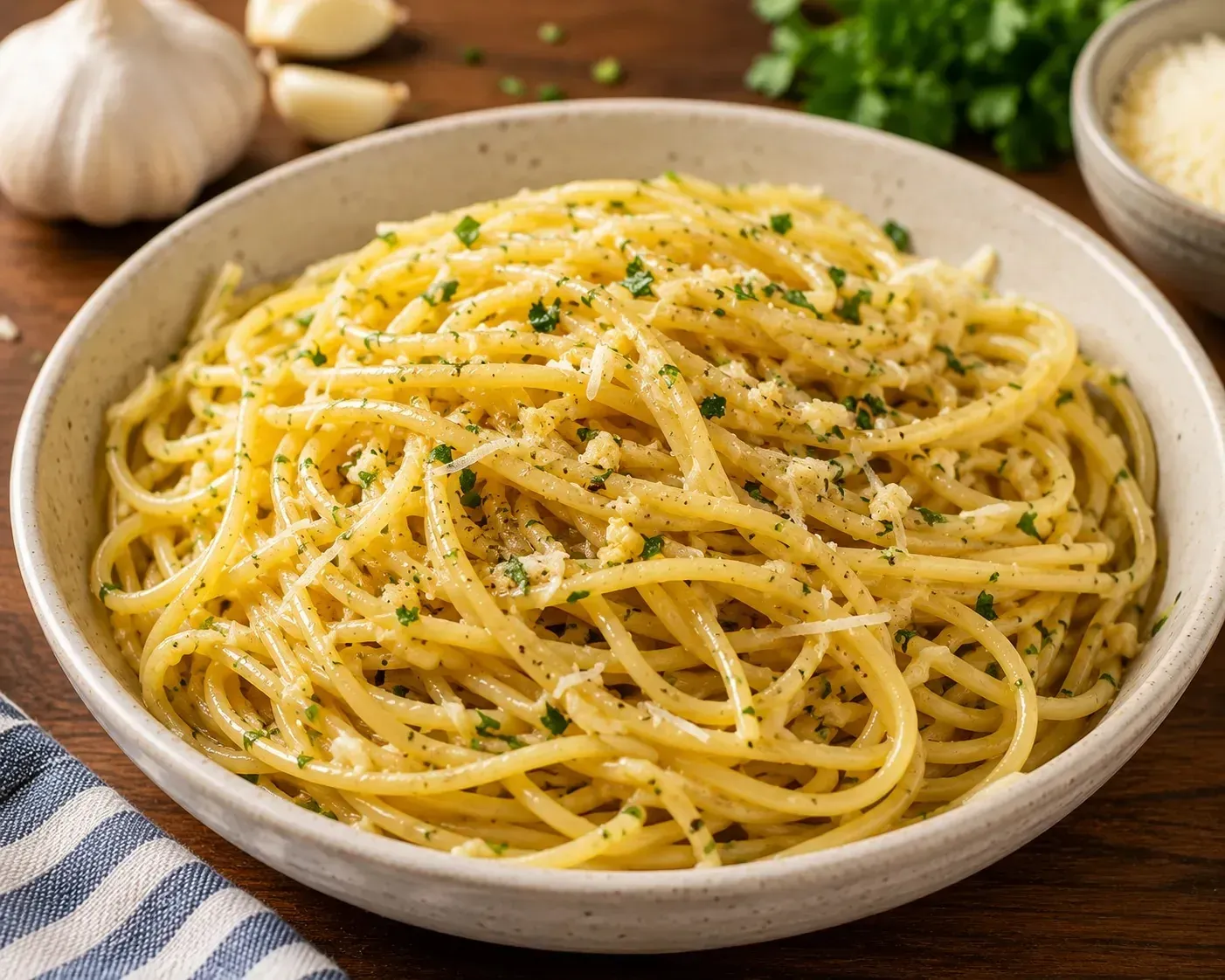
- Measurements grams + cups
- Cuisine Italian
Why You'll Like This Recipe
- Six ingredients, all of them cupboard staples.
- A side dish or a main, depending on what else is going on.
- Under twenty minutes, most of it waiting for water to boil.
Recipe
Garlic Butter Noodles
Pasta tossed in butter, garlic and Parmesan in about 20 minutes.
Ingredients
Ingredients scaled. The method below still refers to the original quantities.
Instructions
- Step 1. Bring a large pot of salted water to a boil.
- Step 2. Add the 340 g pasta and cook according to the package directions until al dente.
- Step 3. Before draining, save about 120 g / ½ cup pasta water.
- Step 4. Melt the 60 g butter in a large skillet over medium-low heat.
- Step 5. Add the 15 g minced garlic and cook for about 30–60 seconds, just until fragrant. Do not let it brown.
- Step 6. Add the drained pasta to the skillet.
- Step 7. Pour in about half of the reserved pasta water and toss until the noodles are glossy and coated.
- Step 8. Add the 45 g Parmesan, 4 g salt, black pepper, and parsley.
- Step 9. Toss again, adding a little more pasta water if needed to make the sauce smooth.
- Step 10. Serve immediately with extra Parmesan on top if desired.
Notes
- Save the pasta water before draining. The starch in it is what turns the butter and Parmesan into a sauce that clings to the noodles.
- Reserve the water before you drain, not after. This is the most common mistake in the recipe and there is no recovering from it.
- Toss hard and keep tossing. The emulsion between butter, water and cheese forms through agitation, not standing.
- Salt the pasta water generously — it is the only seasoning the pasta gets.
Garlic Butter Noodles — Simple Table Recipes · https://simpletablerecipes.com/recipes/garlic-butter-noodles/
Ingredient Notes
- Pasta water
- The most important ingredient in the recipe and the one people throw away. It is starchy and salty, and it turns butter and cheese into a sauce that clings rather than a pool of fat in the bowl.
- Garlic
- Thirty to sixty seconds over medium-low heat, no more. Browned garlic is bitter and there is nothing else here to hide behind it.
- Parmesan, finely grated
- Fine grating melts smoothly into the butter and water. Coarse shreds clump, and pre-grated Parmesan carries anti-caking cellulose that will not melt at all.
Equipment
- Large pot
- Large skillet
Substitutions
- Parmesan
- Pecorino is sharper and saltier, so reduce the added salt. Nutritional yeast works for a dairy-free version alongside a plant butter.
- Additions
- A pinch of chilli flakes, a squeeze of lemon, peas, spinach or cooked chicken all work. Fresh parsley at the end is better than dried.
- Butter
- Half butter and half olive oil gives a lighter version that still emulsifies properly.
Storage
Storing: Best immediately. Refrigerate for up to 2 days and reheat with a splash of water, stirring, since the sauce sets firm when cold.
Frequently Asked Questions
Why should I save pasta water?
It is starchy and seasoned, so it loosens butter and cheese into a proper sauce without diluting the flavour. Water from the tap will not do the same job — it is the dissolved starch that makes the sauce cling.
Why is my garlic butter sauce oily instead of creamy?
Not enough pasta water, or not enough tossing. The butter and water need to be agitated together to emulsify. Add water a splash at a time and keep the pasta moving in the pan.
Can I use garlic powder instead of fresh garlic?
In a pinch, about 3 g. It will not taste the same — fresh garlic bloomed in butter is most of the flavour in a six-ingredient recipe.
What pasta works best?
Long shapes like spaghetti or linguine coat most evenly. Short ridged shapes work too. Very smooth shapes like penne lisce hold the sauce least well.
How do I make this a full meal?
Add cooked chicken, shrimp, or a fried egg on top. Peas or spinach stirred in at the end add vegetables without extra work.
Did you make this?
Let other people know how it went. One tap, nothing to fill in.
Thanks — that helps.