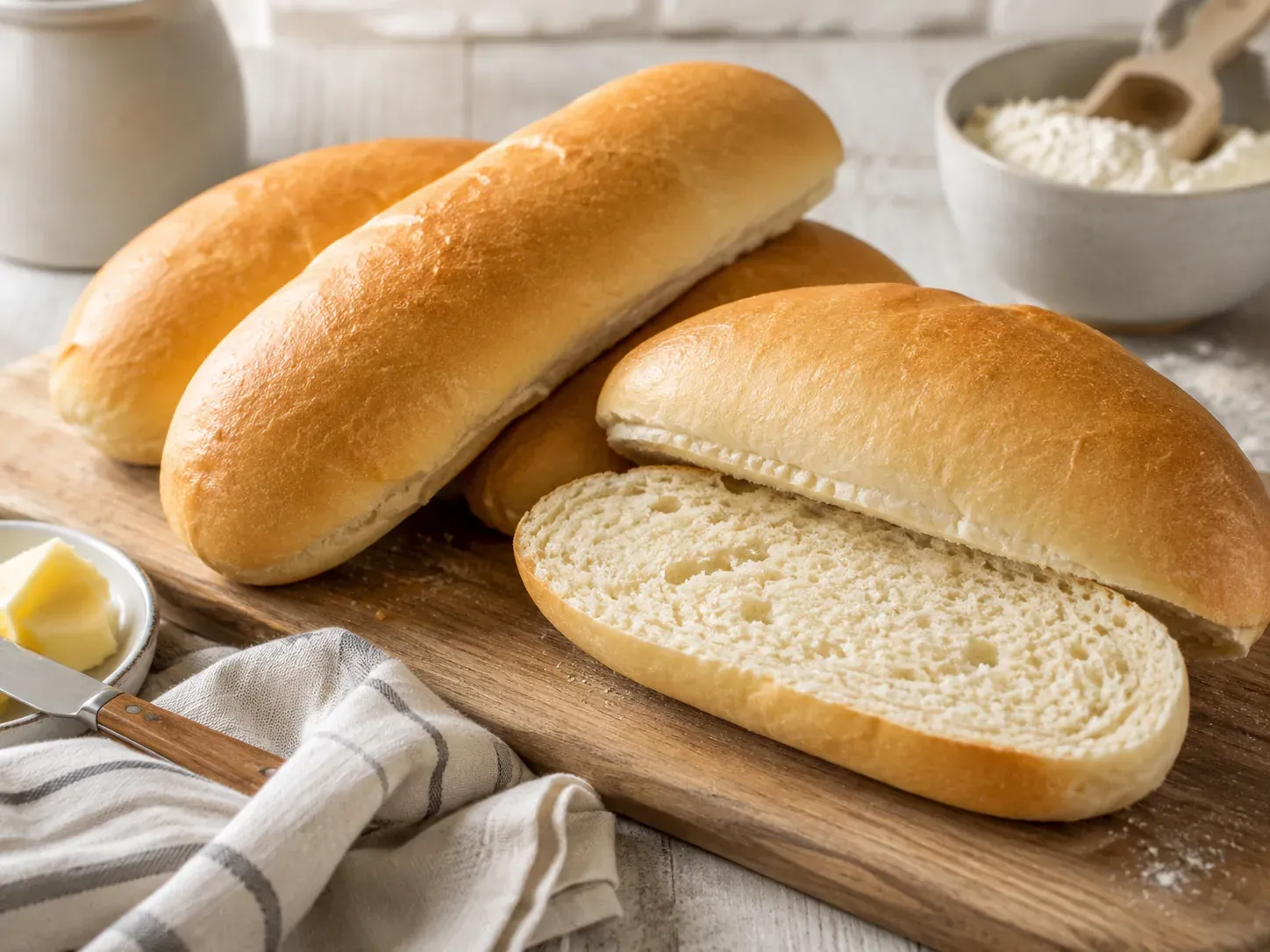
Easy Ciabatta Rolls
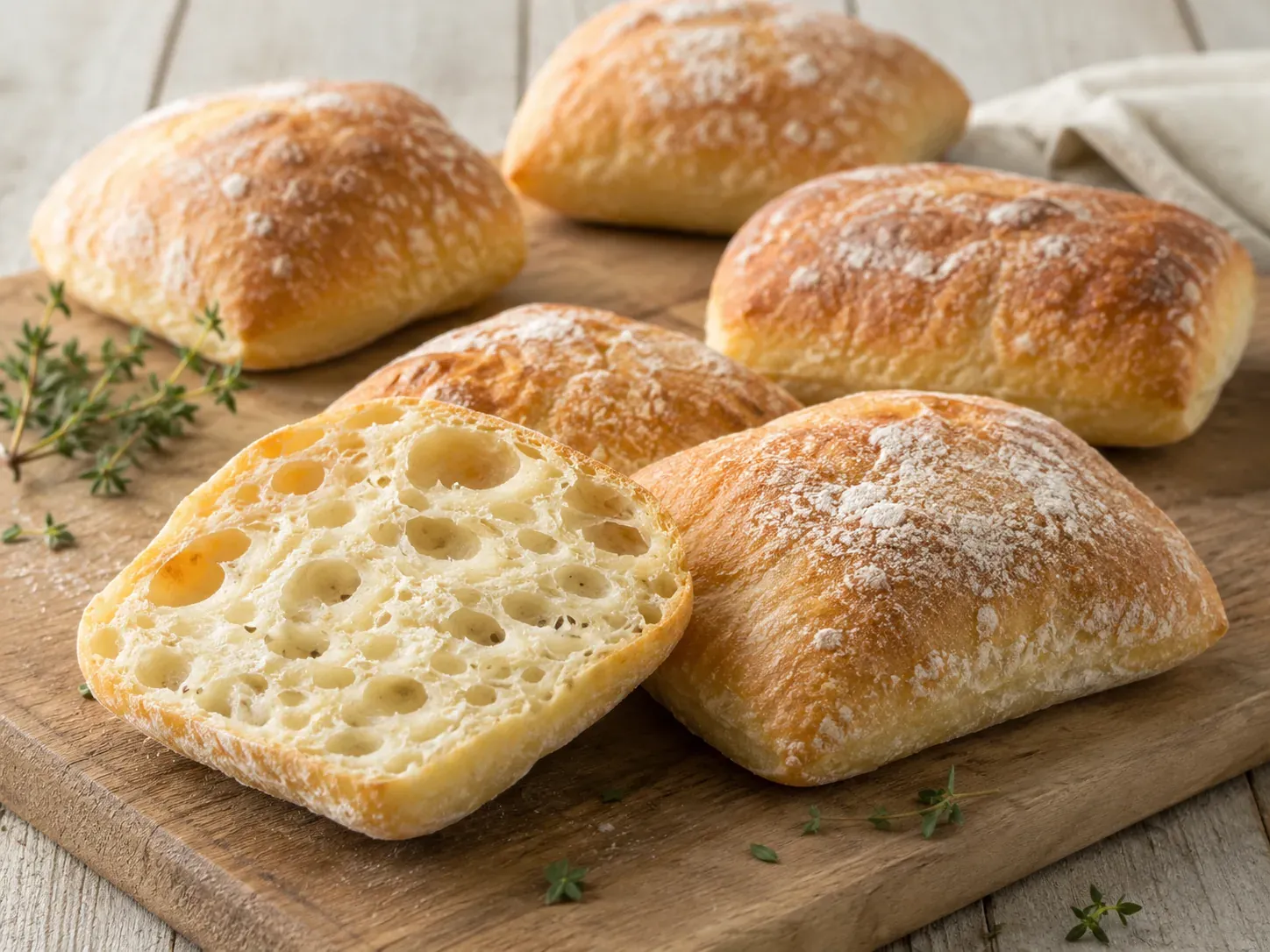
Rustic, airy sandwich rolls with crisp crusts and an open, chewy crumb.
- Measurements grams + cups
Why You'll Like This Recipe
- No kneading — four rounds of stretching and folding at 20-minute intervals does the same work.
- The wet, sticky dough is what creates the big irregular holes. It is meant to feel unmanageable.
- Splits perfectly for sandwiches and holds up to anything wet.
Rustic, airy sandwich rolls with crisp crusts and an open, chewy crumb.
Recipe
Easy Ciabatta Rolls
Rustic, airy sandwich rolls with crisp crusts and an open, chewy crumb.
Ingredients
Ingredients scaled. The method below still refers to the original quantities.
Instructions
- Step 1. Mix the flour, yeast, salt, water, and olive oil until no dry flour remains. The dough will be very sticky.
- Step 2. Cover and rest 20 minutes.
- Step 3. With wet hands, stretch one side of the dough up and fold it over the centre. Repeat on all four sides.
- Step 4. Repeat the stretch-and-fold twice more at 20-minute intervals.
- Step 5. Cover and rise 60 to 75 minutes, until bubbly and expanded.
- Step 6. Turn onto a heavily floured surface without pressing out the air. Gently shape into a rectangle and cut into 8 pieces.
- Step 7. Transfer to parchment, cover loosely, and rest 25 minutes.
- Step 8. Bake at 230 C / 450 F for 20 to 24 minutes, until crisp and golden.
Notes
- Handle the dough gently after the first rise so you keep the bubbles that create the open crumb.
- Wet hands rather than floured ones are what make this dough manageable. Flour on your hands ends up in the dough and tightens the crumb.
- Wet your hands rather than flouring them when you handle this dough. Flour on your hands ends up worked into the dough and tightens the crumb.
- After the final rise, handle the dough as little as possible. Every press flattens bubbles you spent three hours building.
Easy Ciabatta Rolls — Simple Table Recipes · https://simpletablerecipes.com/recipes/easy-ciabatta-rolls/
Ingredient Notes
- Water
- At 80 percent of the flour weight this is a very wet dough. That hydration is the entire point — it is what lets the bubbles form and stay. Do not correct it with extra flour.
Equipment
- Large bowl
- Bench scraper
- Baking sheet
- Parchment paper
Substitutions
- Bread flour
- All-purpose flour will work but produces a softer roll with a slightly tighter crumb. Bread flour has the strength to hold a very wet dough together.
- Semolina for dusting
- Plain flour dusts fine. Semolina gives the traditional gritty base and stops sticking slightly better.
Storage & Freezing
Storing: Best on the day they are baked. Refresh a day-old roll in a hot oven for 5 minutes to bring the crust back.
Freezing: Freeze cooled rolls for up to 2 months. Thaw at room temperature, then crisp in a hot oven for a few minutes.
Frequently Asked Questions
Why is my ciabatta dough so sticky?
Because it is supposed to be. This is a high-hydration dough at roughly 80 percent water to flour, and that stickiness is what produces the open crumb. Wet your hands instead of adding flour — flour worked in at this stage gives a dense, ordinary roll.
What does stretch and fold do?
It builds gluten structure without kneading. Lift one side of the dough, fold it over the centre, and repeat on all four sides. Done three or four times at 20-minute intervals, it develops the same strength kneading would, but without knocking the air out of a dough this wet.
Why does my ciabatta not have big holes?
Usually the dough was handled too firmly after the first rise. The bubbles built over several hours are fragile, and pressing or kneading the dough before shaping destroys them. Turn it out gently and cut rather than shape.
Can I make ciabatta without a stand mixer?
Yes — this recipe never needs one. Mixing is done with a spoon and the structure comes from stretch and folds, so a bowl and wet hands are all the equipment required.
How do I know when ciabatta is done?
Deep golden and crisp on the outside, and hollow-sounding when you tap the base. Underbaked ciabatta collapses slightly as it cools, so err toward more colour rather than less.
Did you make this?
Let other people know how it went. One tap, nothing to fill in.
Thanks — that helps.