Gluten-Free Chocolate Chip Cookies
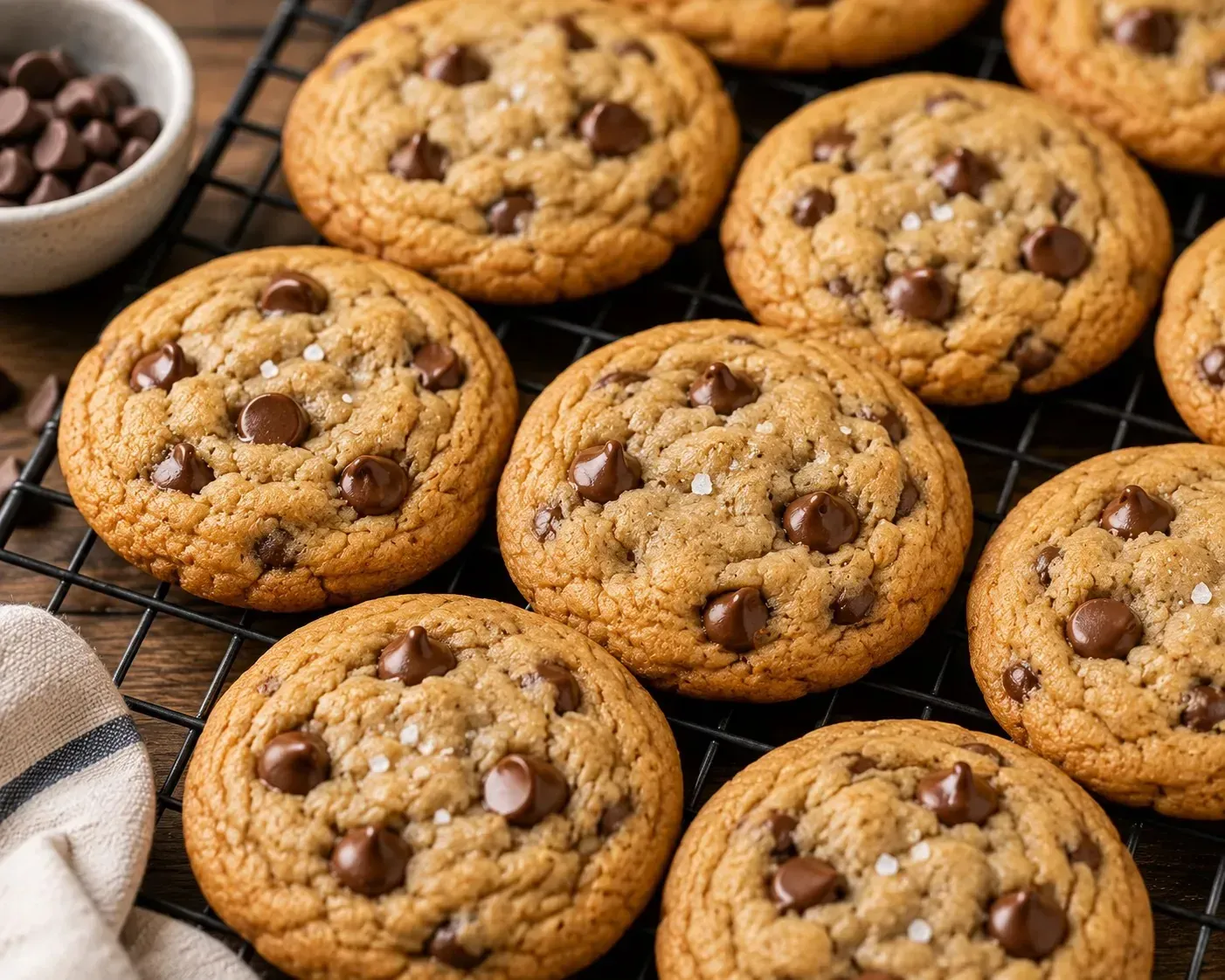
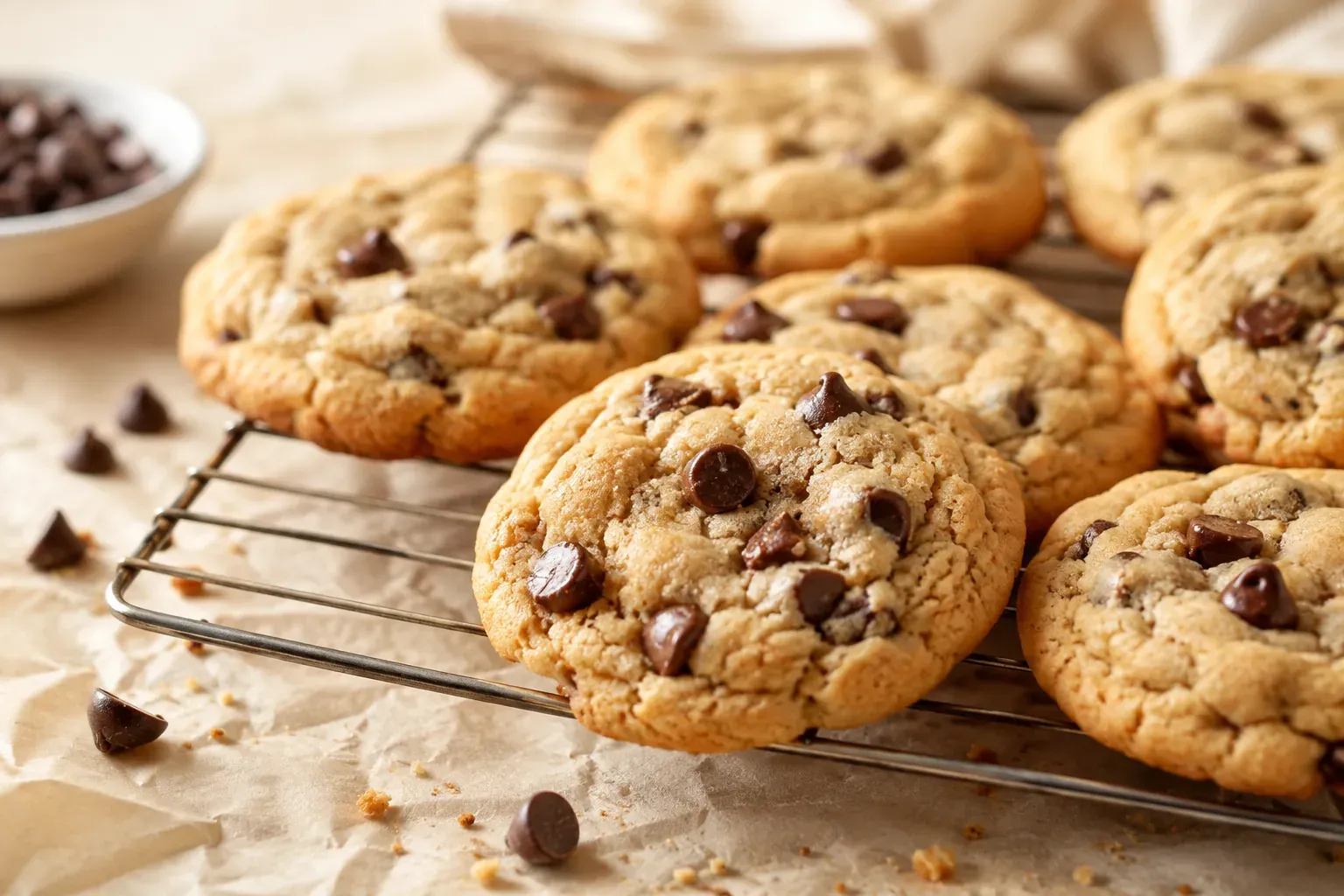
Soft, chewy gluten-free chocolate chip cookies with golden edges and plenty of chocolate chips.
- Measurements grams + cups
- Cuisine American
Why You'll Like This Recipe
- A one-bowl-plus-one dough that behaves like an ordinary cookie dough.
- No specialist flours to blend yourself — a 1-to-1 baking flour does the work.
- Soft and chewy rather than the sandy texture gluten-free cookies often end up with.
Soft, chewy, and made with a gluten-free flour blend rather than anything you have to mix yourself. The one step worth respecting is the ten-minute rest before baking — that is what separates a chewy cookie from a gritty one.
Recipe
Gluten-Free Chocolate Chip Cookies
Soft, chewy gluten-free chocolate chip cookies with golden edges and plenty of chocolate chips.
Ingredients
Ingredients scaled. The method below still refers to the original quantities.
Instructions
- Step 1. Heat the oven to 180 C / 350 F. Line two baking sheets with parchment paper.
- Step 2. Whisk together the gluten-free flour, baking soda, and salt.
- Step 3. In a separate bowl, beat the softened butter, brown sugar, and granulated sugar until creamy.
- Step 4. Beat in the egg and vanilla until smooth.
- Step 5. Add the dry ingredients and mix just until no dry flour remains.
- Step 6. Fold in the chocolate chips.
- Step 7. Let the dough rest 10 minutes so the gluten-free flour can hydrate.
- Step 8. Scoop about 30 g (2 tbsp) of dough per cookie onto the prepared baking sheets, leaving space between each.
- Step 9. Bake 10 to 12 minutes, until the edges are lightly golden but the centres still look slightly soft.
- Step 10. Cool on the baking sheet 5 minutes before transferring to a rack.
Notes
- Gluten-free cookies firm up as they cool. Taking them out while the centres still look a little soft is what keeps them chewy.
- The 10-minute rest is the step people skip and then wonder why the cookies are gritty. Gluten-free flours absorb liquid more slowly than wheat, and that pause is when the starches hydrate.
- Naturally gluten-free foods can still pick up gluten through shared equipment or packaged ingredients. If you are cooking for celiac disease or another medically necessary gluten-free diet, use certified or clearly labelled gluten-free products and avoid cross-contact in your kitchen.
Gluten-Free Chocolate Chip Cookies — Simple Table Recipes · https://simpletablerecipes.com/recipes/gluten-free-chocolate-chip-cookies/
Ingredient Notes
- Gluten-free 1-to-1 baking flour
- Use a blend labelled 1-to-1 or measure-for-measure that already contains xanthan gum. A single flour such as rice or almond will not work here, and a blend without binder produces cookies that crumble apart.
- Chocolate chips
- Not every brand is gluten-free. Check the label if it matters for you.
Equipment
- Two baking sheets
- Parchment paper
- Electric mixer or wooden spoon
- Cookie scoop
Substitutions
- Gluten-free 1-to-1 flour
- Different brands behave slightly differently. Blends based on rice flour give a slightly sandier cookie; those with more starch or sorghum are softer. If your blend does not contain xanthan gum, add about 2 g.
- Unsalted butter
- Salted butter works — reduce the added salt to about 1 g. Dairy-free baking sticks also work, though the cookies spread a little more.
- Chocolate chips
- Chopped chocolate from a bar gives melted pools rather than distinct chips. Check the label either way if strict gluten-free matters for you.
Storage & Freezing
Storing: Keep in an airtight container at room temperature for up to 4 days.
Freezing: Freeze scooped dough balls for up to 3 months and bake from frozen, adding 2 to 3 minutes.
Frequently Asked Questions
Why are my gluten-free cookies gritty?
The flour has not fully hydrated. Gluten-free blends absorb liquid more slowly than wheat flour, which is why the recipe rests the dough for ten minutes before scooping. Skipping that rest is the single most common cause of a sandy texture.
Do gluten-free cookies need xanthan gum?
They need something doing that job. Most 1-to-1 blends already include it, in which case add none. If yours does not, add about 2 g — roughly half a teaspoon. Without a binder the cookies fall apart as soon as you lift them.
Why do my gluten-free cookies spread too much?
Butter that was too soft, or a blend low in binder. Softened butter should hold its shape when pressed. If the dough looks slack after resting, chill it for 20 minutes before scooping.
Can I use almond flour instead of a 1-to-1 blend?
Not as a direct swap. Almond flour is a single flour with no starch and no binder, and it absorbs liquid quite differently. The recipe is written for a measure-for-measure blend.
Do gluten-free cookies taste different?
Made with a good 1-to-1 blend and given time to hydrate, most people cannot tell. The differences that do show up are texture rather than flavour — usually a slightly softer, more delicate cookie.
Can I make these dairy free as well?
Yes. A plant-based baking block in place of the butter works in the same quantity, and dairy-free chocolate chips are widely available. The cookies spread marginally more, so chill the dough before baking.
Did you make this?
Let other people know how it went. One tap, nothing to fill in.
Thanks — that helps.